Sustainable plumbing: where your house wastes water, and the order to fix it
A house is a water system that runs day and night, and most of what it wastes is invisible: a drip you have stopped hearing, a shower head from another decade, a toilet that never quite stops. This is the whole-house view. Where the water actually goes, which changes save the most per litre, what is safe to do yourself, and the point where the job belongs to a licensed plumber.
Updated 16 July 2026 · Reading time approx. 15 min
01 The house as a water system
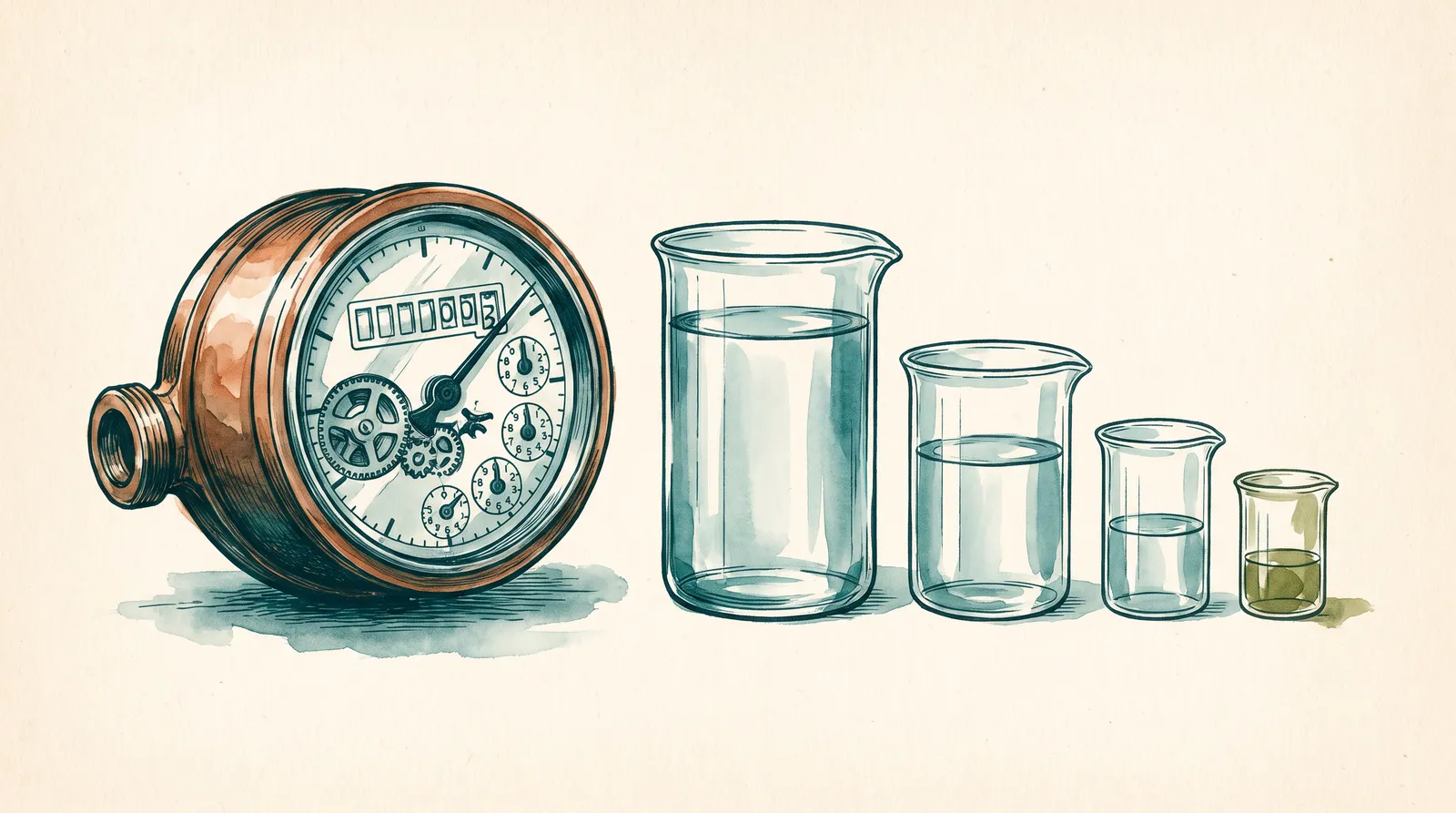
Before you can waste less, it helps to see the whole thing at once. Your house holds two separate water systems that never mix. Supply arrives from the street under mains pressure, splits cold and hot, and pushes water up to every tap, toilet and appliance. Waste leaves the other way, by gravity, falling through the drains to the sewer. The supply side is where a house spends water and energy; the waste side is where blockages and floods happen. This guide lives almost entirely on the supply side.
Two facts about that supply side decide most of what follows. First, the hot water you use costs twice: once for the litres and once for the energy that heated them, which is why the shower is the most expensive tap in the house. Second, the meter at your boundary is the only honest witness to all of it. A house cannot argue with its meter, and the single most useful habit in this guide is learning to read yours.
The facts panel
- Efficiency label to look for
- WELS
- WELS star range
- 0 to 6 stars
- Mandatory in Australia since
- 2006
- One dripping tap wastes
- ~12,000 L/yr
- Fixture and supply work is
- licensed work
WELS (the Water Efficiency Labelling and Standards scheme) is the national label on taps, showers and toilets; the 12,000-litre figure is YourHome (Australian Government). Both are in the sources below.
02 Where the water actually goes
Almost all of a household's indoor water leaves through three fixtures: the shower, the taps and the toilet. That is good news, because it means efficiency is not a thousand tiny sacrifices. It is three or four good decisions, made once. The catch is that the difference between an efficient fixture and a thirsty one is much larger than most people expect.
The outdoor tap is the wild card. In a dry stretch a garden can quietly out-drink the whole house, which is why rainwater and greywater (section 05) do their best work outside. And there is a fourth draw that appears on no fixture list because it is not meant to be there at all: leaks. A single dripping tap wastes around 12,000 litres a year, and a toilet that runs can waste far more than that, silently, before anyone notices (YourHome). Leaks are dealt with first for exactly that reason.
03 The fix-order: litres per dollar
Sustainable plumbing is not about spending the most. It is about spending in the right order, because the cheapest changes usually save the most water, and the expensive ones save the least per dollar. Work down this list and stop wherever your budget stops; you will already have captured most of the benefit.
- Find and fix the leaks. This is first because it is nearly free and the waste is pure. A worn washer or a running cistern costs a few parts and saves thousands of litres a year. Nothing you buy later will out-earn a leak you fix today. Our companion piece on addressing common plumbing leaks is the field guide to finding them.
- Change the water you use without noticing. Shorter showers, the tap off while you brush or scrub, full loads only in the machine, a broom instead of a hose on the drive. No cost, immediate, and it compounds daily. The room-by-room map is in tips for reducing water usage at home.
- Fit efficient fixtures where the water is. A WELS-rated shower head, tap aerators, a dual-flush toilet. These are the highest-value purchases in the house because they work every single day for years, and section 04 is how you choose them without guessing.
- Then, and only then, the big systems. An efficient hot water system, a rainwater tank, a greywater setup. These are real and worthwhile, but they cost the most and save the least per dollar, so they come after the cheap wins, not instead of them.
The logic behind this order is the plainest idea in this guide, and it is worth saying once directly: repair before you replace, and retrofit before you rip out. A tank that only needs a new valve does not need a new tank; a bathroom that needs a shower head does not need a renovation. Keeping sound equipment in service is both the cheapest choice and the greenest one, because the most sustainable fixture is very often the one you already own.
Turn off every tap and appliance in the house, then read your water meter. Wait an hour with nothing running and read it again. If the numbers moved, water is escaping somewhere, and you have just found a leak before it found you. It is the first diagnostic in this whole guide and it costs nothing.
04 Reading a WELS label
Every tap, shower, toilet, washing machine and dishwasher sold in Australia carries a WELS label by law, and once you can read it, choosing an efficient fixture takes about ten seconds in the aisle. The label does two things: it gives a star rating, and it gives a water-consumption figure.
The stars run from zero to six, and more stars mean more efficient. They are a quick relative ranking, useful for comparing one shower head against another shower head. The litres figure is the one that actually tells you how much water the thing uses: litres per minute for a tap or shower, litres per flush for a toilet. When two products have the same stars, the litres figure breaks the tie.
One honest caveat keeps the stars in perspective: a very low flow is not always the best experience. A six-star tap is ideal at a basin, but a kitchen that fills pots may prefer a four-star tap that gets the job done faster, using less water overall than a trickle you leave running longer. Efficiency is litres for the task, not the smallest number on the shelf. The official register at waterrating.gov.au lets you compare every rated model before you buy.
05 The levers, largest first
Here is the menu, in the order section 03 recommends pulling it. Each lever has its own deeper guide on this site; this is the map, not the whole territory.
Leaks. The first and cheapest lever, covered above and in the leaking taps guide and broken pipes guide. A drip is a worn seal under constant pressure; a concealed leak is the same fault out of sight. Both waste water every second until fixed, and both are found by the meter test.
The toilet. An old single-flush toilet uses roughly 11 litres every time; a modern four-star dual-flush averages closer to four, and a running cistern can quietly waste more than any other fixture in the house. If the house still has a single-flush toilet, replacing or converting it is one of the largest single savings available. There are greener options too, from pressure-assisted low-flush designs to composting toilets for the right property.
The shower and taps. A WELS-rated shower head and a set of tap aerators are the highest-value purchases in the house: cheap, quick, and working every day. A good efficient head mixes air into the flow, so it feels full at a fraction of the litres. Keeping taps in good order matters too, and our note on preventive maintenance for taps covers the small habits that stop a good tap becoming a leaking one.
Hot water. Because hot water costs twice, an efficient system is a water and an energy decision at once. Heat pump, solar and instantaneous systems each suit different homes, and the choice is worth getting right; the installation guide compares them honestly, and our study on solar hot water works through when the sums actually add up. A cheaper companion move: insulate the exposed hot water pipe run so you waste fewer cold litres waiting for the hot to arrive.
Outdoor and reuse. This is where rainwater tanks and greywater systems earn their place, feeding gardens, toilets and laundries with water that would otherwise be drinking-quality mains water or run straight to the drain. They cost the most and so come last in the order, but in a dry climate with a decent roof and garden they take a real bite out of mains demand. Anything that plumbs reused water back into the house is licensed work (section 06).
Smarter monitoring. Leak detectors and smart meters now watch the line for you and can shut the water off before a burst floods a room; our study on smart home plumbing separates what is genuinely useful from what is a brochure.
06 Yourself, or a licensed plumber
This is the question behind every job in this guide, and the honest answer is a clear line, not a grey area. Plumbing work in Australia is licensed work, for a reason: a bad connection to a pressurised or gas supply does not fail politely.
Generally treated as homeowner maintenance (though rules vary by state, so check your state regulator before you start): replacing a tap washer or O-ring, cleaning a clogged aerator, swapping a like-for-like shower head, adjusting or replacing the parts inside a toilet cistern, and clearing a blockage you can reach with a plunger. These share three properties: they do not open the pressurised supply, they cannot flood the house if they fail, and they undo easily.
Licensed work, without exception: anything that cuts into or connects to the water supply or drainage, new or altered pipework, installing or replacing a hot water system, any gas work at all, backflow prevention, and plumbing a rainwater or greywater system into the house. If a job needs the water shut off at the main to do it, that is the tell that it has crossed the line.
The homeowner list above is genuinely doable, and doing it is how a house stays water-wise cheaply. The rule is the same as everywhere on this site: the moment a job wants you to open the supply, touch the hot water unit or smell gas, stop. The next step is a phone call, and it is the right one.
New fixtures connected to supply or drainage, hot water systems, gas, and any reuse system plumbed into the house are licensed work in every state and territory. A compliant job also protects you: unlicensed plumbing can void your home insurance and is illegal to sell a house with.
07 The cost of getting it wrong
The failures in sustainable plumbing are rarely dramatic. They are quiet, they compound, and most of them come from one of three mistakes.
Buying on price instead of stars. A thirsty shower head or a single-flush toilet is cheap once and expensive forever, because you pay the difference in every water and energy bill for as long as it is fitted. The WELS label exists precisely so this decision is easy to get right; ignoring it is the most common and most avoidable error in the house.
Skipping the licence to save a day. Unlicensed or bodgy plumbing is the expensive kind of cheap. A connection into the pressurised supply that a non-plumber makes can hold for months and then let go behind a wall, and the water damage dwarfs whatever the licensed job would have cost. Insurers routinely name flexible braided connector hoses, the ones under sinks and behind toilets, among the most common causes of household water-damage claims; they have a service life, so check them every couple of years and replace them before they fail, not after.
Replacing what only needed repairing. The greenest and cheapest move is usually to keep sound equipment in service, yet the reflex is to rip it out. A hot water system that needs a valve does not need replacing; galvanised pipe that is failing in one wall does not always mean re-piping the whole house at once. Match the fix to the fault. Over-servicing wastes money and materials for no extra saved litre, which is the opposite of sustainable.
One mechanism deserves a mention here because it damages pipework invisibly: temperature swings and water hammer. Big temperature changes stress joints over time, and a valve slammed shut sends a pressure wave through the whole line; our study on temperature and pipe integrity covers why an ageing system can start leaking for reasons that have nothing to do with how you use it.
08 Older homes and their pipes
Everything above applies to any house, but older homes carry one extra decision the rest do not: the pipes themselves. The material a house was plumbed with decides how efficient it can ever be, and many homes built before the 1980s were run in galvanised steel.
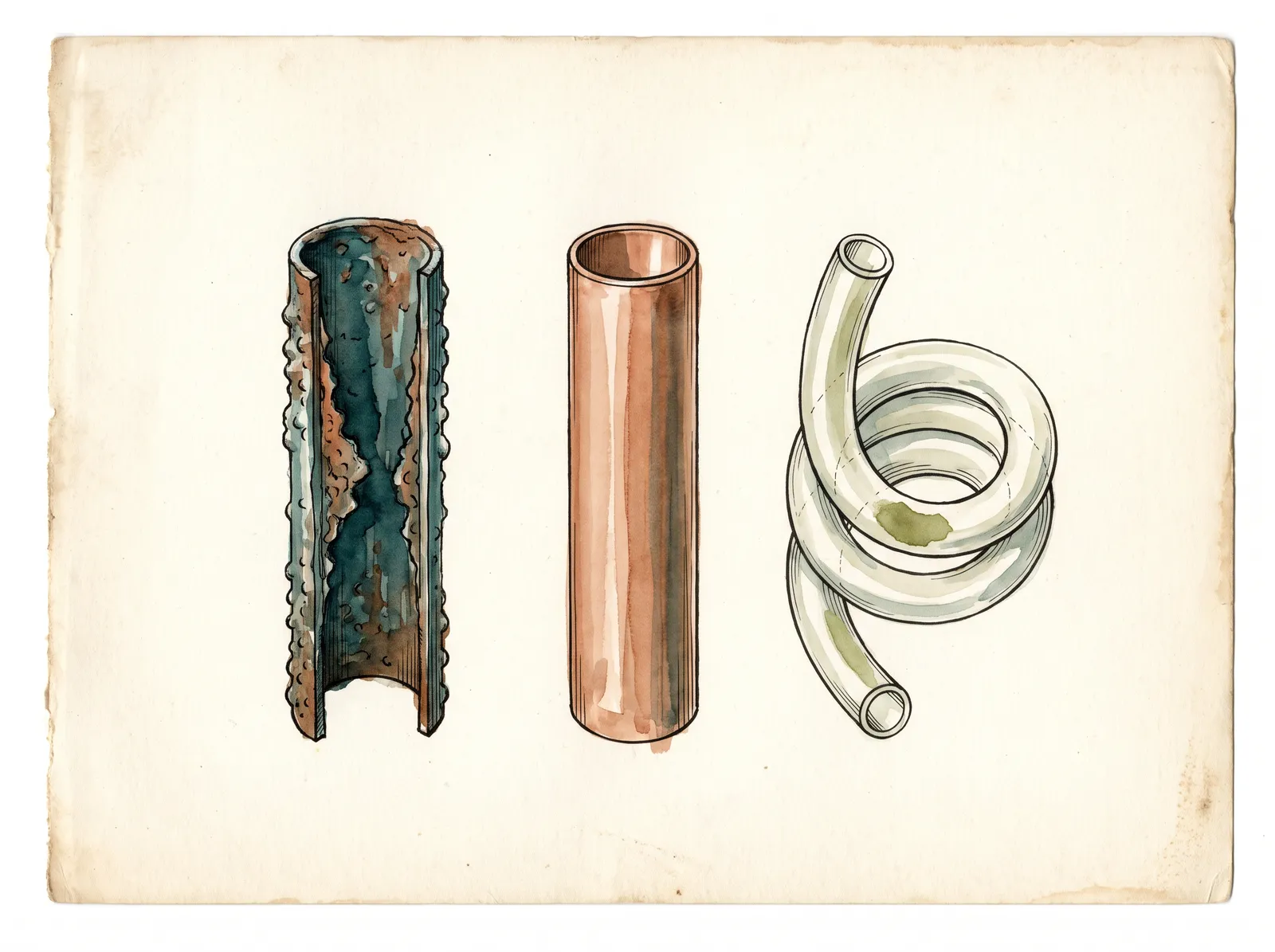
Galvanised pipe fails from the inside out. It rusts and furs with mineral scale until the bore narrows, which shows up as three familiar complaints: falling water pressure across the house, discoloured water (a brown tinge on the first draw of the morning), and eventually pinhole leaks that return in one spot after another. A house that ticks all three is telling you the pipe, not the fixtures, is the limit, and no efficient shower head will fix low pressure caused by a pipe that is closing itself off.
The modern replacements, copper and PEX (cross-linked polyethylene), resist corrosion, hold their full bore, and last for decades, which is why re-piping an old home improves water quality and pressure at the same time. It is licensed work and it is not cheap, so it follows the same repair-before-replace logic as everything else: you can stage it wall by wall as rooms are renovated rather than all at once, and you can preserve the character of a period home while modernising what runs behind its walls. If your older home has good pressure, clear water and no recurring leaks, its pipes are doing their job, and your effort belongs at the fixtures instead.
09 Questions, answered
Do low-flow shower heads actually work, or just feel weak?
A good one works. The trick in an efficient WELS-rated head is aeration: it mixes air into the water, so the spray feels full and warm while the litres per minute drop to roughly a third of an old unrestricted head. The ones that feel weak are usually cheap flow restrictors jammed into an old fitting, not purpose-designed efficient heads. Look at the stars and the litres figure, not the price.
What do the stars on a WELS label actually mean?
They rank a product against others of the same kind, from zero to six stars, where more stars means more efficient. They are a quick relative guide. The separate litres figure on the label (litres per minute, or per flush) is the real measure of how much water the product uses. Compare like with like, a shower head against a shower head, and let the litres figure break a tie between equal star ratings.
Is a rainwater tank or greywater system worth it?
It depends on your climate, your roof area and what you would use the water for. In a dry region with a decent roof and a thirsty garden, a rainwater tank pays back in mains water it never has to buy; greywater from the shower and laundry can feed a garden well. Both cost more than fixture upgrades, so the fix-order puts them last, after the cheap wins. Any system plumbed back into the house is licensed work, and YourHome (in the sources) has the detail on sizing and use.
Can I replace my own tap washer?
In most states a washer or O-ring change is treated as minor maintenance a homeowner can do, because it does not open the pressurised supply. Rules vary, so check your state regulator before you start. Anything beyond it, cutting into supply pipe, moving a fixture, touching hot water or gas, is licensed work. The honest test is simple: if the job needs the water shut off at the main, it has crossed the line.
Does fixing small leaks really make a difference?
More than almost anything else you can do. A single tap dripping once a second wastes around 12,000 litres a year, and a toilet that runs can waste far more than that, all of it drinking-quality water you are paying for (YourHome). Leaks are pure waste with no upside, they are cheap to fix, and that is why they sit first in the fix-order ahead of every purchase.
What is the single highest-value change I can make?
Fix your leaks, then upgrade your shower. Leaks are free waste, so stopping them is the best return on earth; the shower is the biggest everyday draw and the one that also costs energy, so an efficient head is the best purchase. Do those two before anything expensive, and you will have captured most of what a whole renovation would.
+ The studies behind this guide
Three journal entries carry this guide's deeper dives, each kept at its original address and date:
10 Check your symptom
The desk below covers this guide's everyday territory: the drips and runs that waste the most water. Pick what you are seeing for the mechanism and an honest read on how urgent it is, then send us the specifics.
The interactive desk needs JavaScript, but the enquiry desk does not: describe what you are seeing and we will point you in the right direction.
Sources
- YourHome: Reducing water use, the Australian Government's guide to environmentally sustainable homes. The leak and water-waste figures on this page, including the 12,000-litre drip and the running-toilet figures, come from here, along with the guidance on rainwater and greywater reuse.
- Water Rating (WELS), the Australian Government's Water Efficiency Labelling and Standards scheme. The star ratings and litres-per-minute or per-flush figures described in section 04, and the searchable register of every rated product, live here.
- Plumbing Code of Australia, Australian Building Codes Board. The national framework (applying AS/NZS 3500) behind the statement that fixture, supply and drainage work is licensed work in Australia.
Tell us what your plumbing is doing
Describe the symptom, the fixture and how long it has been going on. We read every enquiry and reply with guidance and a sensible next step. Anything that needs tools is a licensed plumber's job, and we will say so plainly.