Solar hot water systems: are they worth the investment?
Heating water is one of the largest energy uses in an Australian home, so the appliance that heats it is worth getting right. Solar costs more to buy and much less to run. Whether that trade works for you comes down to sun, space and how long you are staying.
Published 18 March 2025 · Reading time approx. 8 min
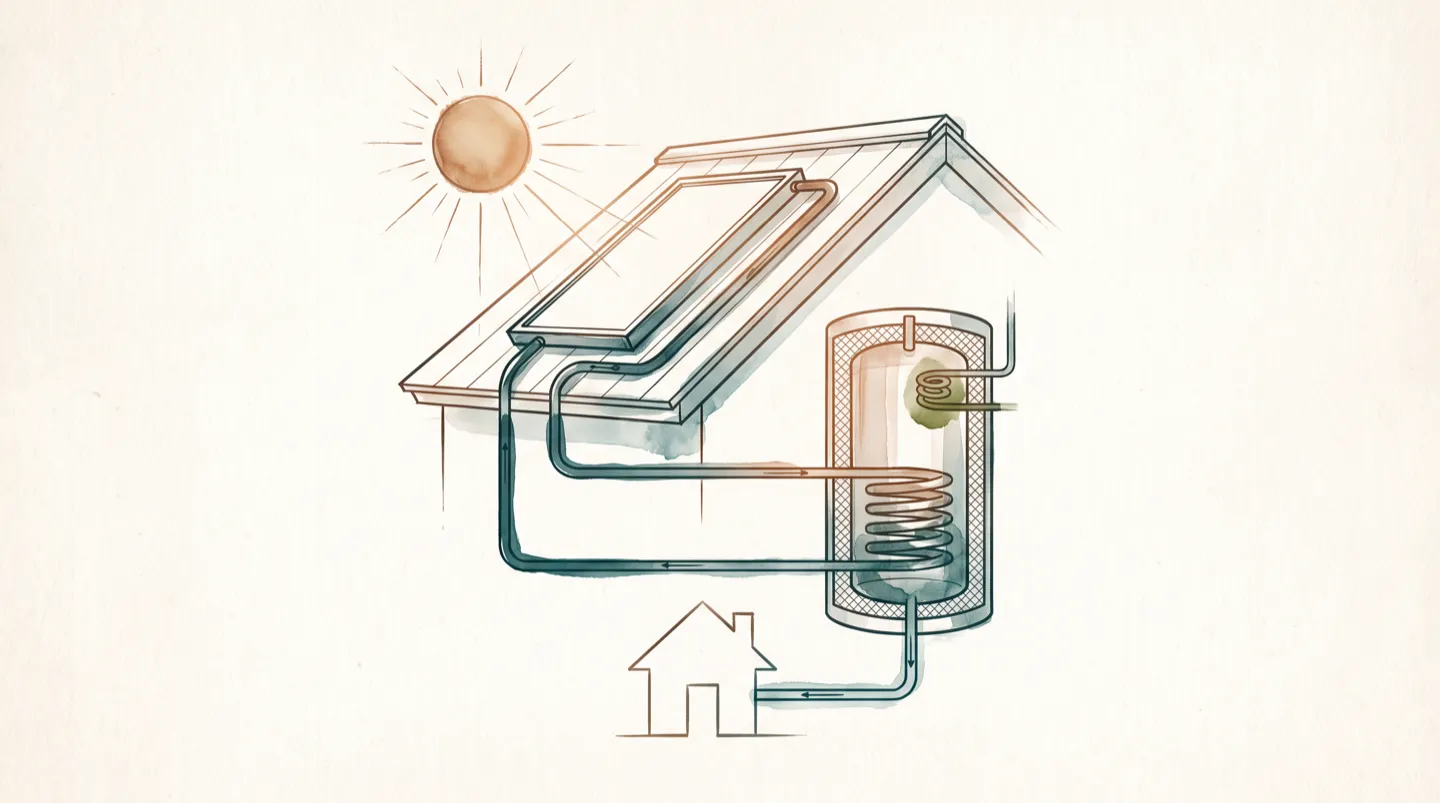
Water heating is a bigger deal in the energy bill than most people realise: it is one of the largest single uses of energy in a typical Australian home.1 That is exactly why the choice of hot-water system matters, and why solar keeps coming up. The honest answer to "is it worth it" is a qualified yes for many homes, and the qualifications are what this piece is about.
How a solar hot water system works
A solar hot water system uses roof-mounted collectors, either flat panels or evacuated glass tubes, to absorb sunlight and heat water, which is then held in an insulated storage tank ready for use. Because the sun does not shine on demand, every system includes a booster, electric or gas, that tops the tank up on overcast days and through a run of bad weather, so you never actually run out of hot water.
There are two broad arrangements. Close-coupled or passive systems mount the tank on the roof beside the collectors and rely on heat rising to circulate the water, with no pump to fail. Split or active systems keep the tank at ground level and use a small pump to move water up to the collectors and back, which looks tidier and suits homes where a tank on the roof is not practical. Which one fits depends on your roof, your climate and where the tank can go, and it is a sizing decision worth getting right up front.
The cost trade, without the sticker numbers
The shape of the decision is simple even without quoting prices. A solar system costs more to buy and install than a conventional electric or gas unit, and much less to run, because sunlight replaces most of the energy you would otherwise pay for. A well-sized solar system can supply the large majority of a household's hot water from the sun across a year, cutting the energy used for water heating substantially.1 The higher purchase price is repaid over time out of the lower bills; how many years that takes depends on your energy prices, how much hot water you use, and the rebates you can access. The more hot water your household uses, the faster the sums work, which is why solar suits a busy family better than a one-person flat.
Solar hot water pays back through running-cost savings, so the question is not only "can I afford the upfront cost" but "am I staying in this home long enough to get it back". If you expect to move within a couple of years, the running savings may not have time to catch up with the higher purchase price, though a good system can still add to what the house is worth.
The rebates that shrink the price
The upfront cost is not the whole story, because eligible solar and heat-pump hot water systems earn Small-scale Technology Certificates under the federal Small-scale Renewable Energy Scheme, administered by the Clean Energy Regulator. The certificates have a value that is usually taken off the purchase price at the point of sale, which lowers what you actually pay.2 Several states and territories add their own hot-water rebates on top, so it is worth checking both the federal certificates and your local scheme before you buy; between them they can move the payback period forward by years.
The environmental case
Because water heating is such a large slice of a home's energy use, shifting it to the sun is one of the more effective things a household can do to cut its emissions. A solar system displaces the grid electricity or gas that a conventional unit would burn every day, year after year, which is a steady reduction rather than a one-off. For a home that cannot easily reduce its hot-water use, changing how that water is heated is often the bigger lever.
When a heat pump is the better answer
Solar thermal is not the only low-energy option, and it is not always the right one. A hot-water heat pump heats water by moving warmth from the surrounding air rather than burning energy to make it, which makes it very efficient, and it needs no roof collectors, so it suits a shaded roof, a heritage roofline, or a home where the plumbing makes rooftop collectors awkward. Heat pumps are eligible for the same Small-scale Technology Certificates as solar. Choosing between the two, and sizing either correctly, is a job for a hot-water specialist: in the Hunter region, for example, Hogan Hot Water and Air supplies and installs both solar and heat-pump systems and handles the licensed connection.
Who it genuinely suits
Solar hot water is a strong choice if you have a roof with decent sun and the space for collectors, a household whose hot-water use is high enough to earn back the outlay, and the intention to stay long enough to bank the running savings. The drawbacks are honest ones: a higher upfront cost, performance that dips through long cloudy spells (which the booster covers), a need for adequate roof space and orientation, and light but real servicing to keep it efficient. Weigh those against years of much lower running costs and a smaller footprint, and for many Australian homes the trade comes out in favour of solar.
This entry sits under our guide to installing and renovating, which covers what you choose and what a licensed plumber signs off across hot water and the rest of the house.
If you are weighing solar against a heat pump or a conventional unit for your own roof and household, describe your situation at our enquiry desk and we will help you think it through. Supplying, installing and connecting a hot-water system is licensed work, so the install itself is a job for a certified installer.
Sources
- Hot water, Your Home (Australian Government). Supports the points that water heating is one of the largest single energy uses in an Australian home, and that a well-sized solar system can supply the large majority of a household's hot water and substantially cut the energy used to heat it.
- Small-scale Renewable Energy Scheme, Clean Energy Regulator. Eligible solar and heat-pump water heaters create Small-scale Technology Certificates, whose value is commonly assigned to the supplier as a discount off the purchase price.