Addressing common plumbing leaks for water conservation
The leaks that waste the most water are the ones you never hear. Real household water conservation usually starts by finding a silent leak, not by fixing the tap that has been dripping in plain sight.
Published 19 August 2024 · Reading time approx. 6 min
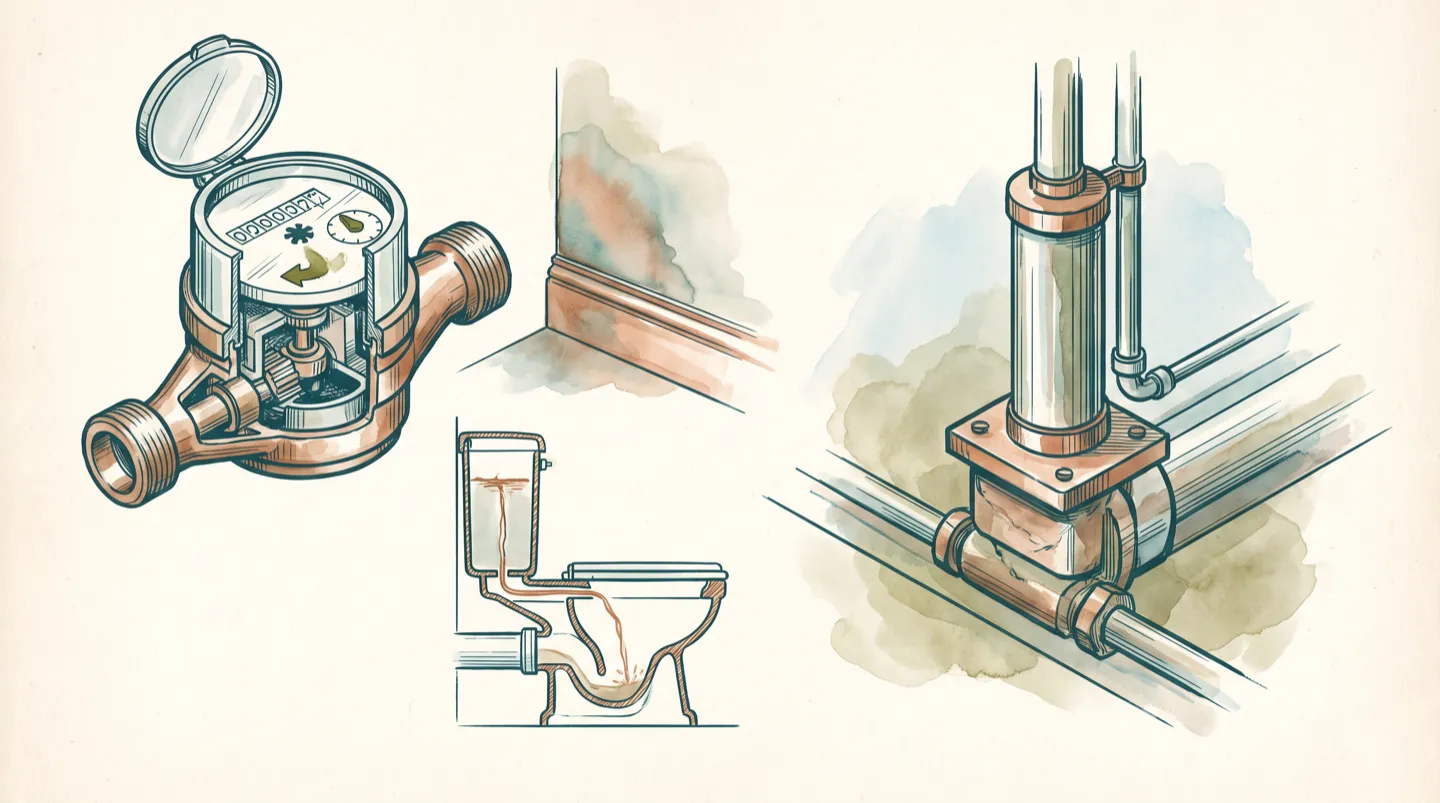
A dripping tap is the leak everyone talks about, because you can hear it. But the leaks that quietly move the most water through a house are usually the ones with no sound at all: a toilet weeping from cistern to bowl, a fitting seeping inside a wall, a slab leak under the floor. If water conservation at home is the goal, the useful skill is not fixing the obvious drip, it is finding the ones you cannot see. Two simple tests and a bit of observation do most of the work.
The whole-house test: read the meter
Your water meter is a leak detector you already own. Turn off every tap and water-using appliance in the house, then find the meter (usually near the front boundary) and watch the small leak-indicator dial or the last digits of the reading. If anything is still moving with everything off, water is escaping somewhere. For a slower leak, take a reading last thing at night, use no water overnight, and read it again in the morning: any change is a leak. This one test tells you whether you have a hidden leak at all before you spend an afternoon hunting for it.
A water bill that has climbed for no reason, a patch of lawn that stays green in a dry spell, the sound of running water when nothing is on, or a warm spot on the floor over a hot-water line: each is a hidden leak announcing itself. The meter test turns the suspicion into a yes or no.
The toilet: the biggest silent waster
A leaking toilet is the leak most worth catching, because it can waste far more water than a dripping tap and makes no noise doing it: a silently running toilet can lose tens of thousands of litres a year.1 The test takes a minute. Put a few drops of food colouring in the cistern, wait about fifteen to twenty minutes without flushing, and check the bowl. If colour has crept into the bowl, water is leaking past the flush valve or the seal, usually a perished flapper or a worn outlet washer. These are inexpensive parts, and replacing them is the highest-return water-conservation fix in most homes.
Concealed pipe leaks: map the damp
A pipe weeping inside a wall or under a floor leaves a trail before it ever shows as water. Look for the map it draws: a damp or discoloured patch on a wall or ceiling, paint that bubbles or lifts, a skirting board that stays dark at the base, a musty smell in one room, or tiles that sound hollow. Note where the marks are and whether they grow, because a concealed leak is one of the few household faults where early detection genuinely saves both water and a much larger repair. Small accessible leaks can sometimes be held with a repair clamp or tape as a stop-gap, but a leak inside the building fabric is licensed plumbing work, and finding its exact source without opening the whole wall is exactly what a plumber's acoustic and thermal leak-detection gear is for.
The taps you can hear
The visible drips still count. A steadily dripping tap wastes up to around 12,000 litres a year depending on the drip rate, and the cause is almost always a hardened washer or a worn seal that costs a few cents to replace.1 A washer swap sits on the DIY side of the line in most states; everything past it is licensed work, and your state plumbing regulator is the place to confirm where that line sits where you live. Fixing a drip promptly also stops the running water from cutting into the brass seat behind the washer, which is what turns a cheap fix into a bigger one.
The pressure behind the leaks
Pressure is the quiet accomplice in most leak stories. Australian plumbing work is built to AS/NZS 3500.1, which limits static pressure at any indoor outlet to 500 kPa; where the street supply runs higher, a pressure limiting valve brings it down.2 A house sitting above that mark leaks earlier and more often: washers flatten faster, flexible hoses strain, and hammering taps shake joints loose. Measuring the pressure and fitting or adjusting the valve is a licensed plumber's job, and it eases the load on every fixture at once.
Where smart leak detection helps
For leaks that would otherwise run for weeks, a smart leak sensor earns its place. Small battery detectors placed under sinks, behind the toilet and near the hot water unit sound an alert the moment they sense water, and whole-of-house monitors on the main can flag the continuous low flow that signals a hidden leak, with some able to shut the supply off automatically. None of this replaces the meter test or a fixed washer, but for a leak in a place you rarely look, an early alert is the difference between a wipe-up and a flooded cabinet.
This entry sits under our sustainable plumbing guide, which sets out the wider water-saving picture, from WELS ratings to the order in which fixes pay off. For the tap side specifically, see the guide to leaking taps.
If your meter keeps ticking with everything off, or a damp patch is spreading and you cannot find the source, describe it at our enquiry desk and we will point you to a sensible next step.
Sources
- Sydney Water: Water saving tips. The leaking-toilet and dripping-tap waste figures, and the point that worn flappers, washers and seals are the usual cause, come from Sydney Water's household water-efficiency guidance; actual loss depends on the leak.
- Plumbing Code of Australia, Australian Building Codes Board. AS/NZS 3500.1 (Water services), applied nationally through the Plumbing Code, sets the 500 kPa maximum static pressure at an outlet within a building and the requirement for pressure limiting on new work. The standard itself is paywalled; the ABCB page describes its role.
- YourHome: Reducing water use, the Australian Government's guide to sustainable homes. General guidance on cutting household water use, including finding and fixing leaks and choosing water-efficient fixtures.