What sustainable plumbing actually means in Australia
Strip away the marketing and "sustainable plumbing" comes down to three plain ideas: use less water at the fixture, waste less energy heating it, and reuse the water you can. None of them is a gadget. All of them are measurable.
Published 4 September 2023 · Updated 28 August 2024 · Reading time approx. 7 min
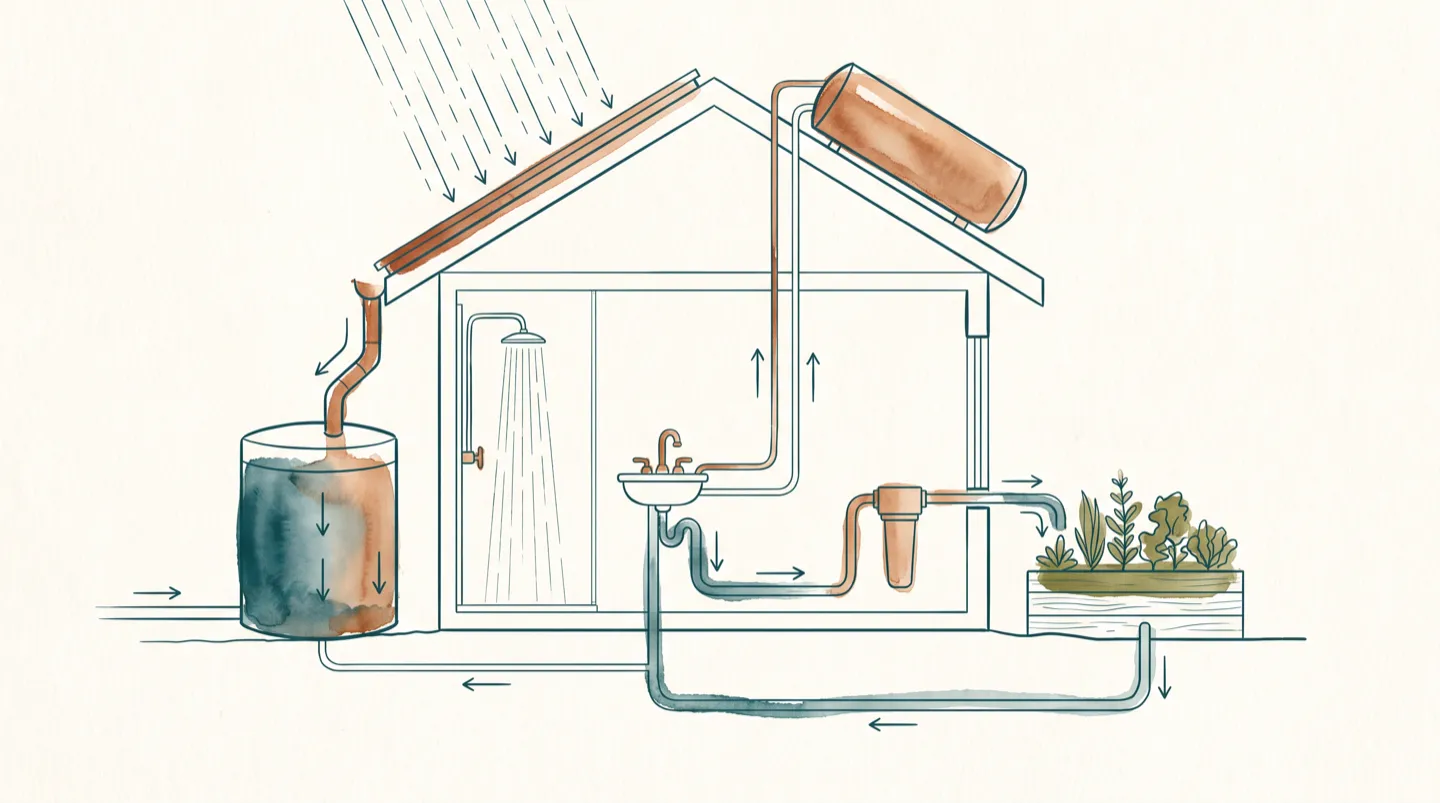
Australia is the driest inhabited continent, and its rainfall swings hard between drought and flood. That single fact is why plumbing here carries more weight than it does in wetter countries: the fixtures in a house decide how much of a scarce, energy expensive resource gets used and thrown away every day. "Sustainable plumbing" is the label for choosing and running those fixtures so they draw less. It is worth understanding at the level of mechanism, because that is where the honest savings are, and where the marketing tends to go quiet.
Using less water at the fixture
The largest, cheapest gains come from the fixtures themselves, because a house uses the same taps, toilet and shower thousands of times a year. A dual flush toilet uses a fraction of the water of an old single flush cistern on the half flush. An aerated showerhead mixes air into the stream so it feels full while moving less water. A tap with a flow restrictor delivers what you need for washing hands without opening a fire hose. Each change is small; multiplied across a year and a household, they are the bulk of the difference.
Australia makes this choice unusually easy to get right. Every tap, toilet, showerhead, dishwasher and washing machine sold here carries a WELS label, the Water Efficiency Labelling and Standards scheme, which is a legally required, directly comparable star rating of how much water the fixture uses.1 More stars means less water for the same job. When a fixture is due for replacement, reading the star rating is the entire sustainable decision, no expertise required.
A steadily dripping tap or a silently running toilet undoes efficient fixtures faster than they save. A running toilet flapper can waste more water than the whole household uses deliberately. Sustainable plumbing starts with fixing leaks, not buying anything: it is the one improvement that costs a washer and pays back immediately.
Wasting less energy heating it
The second idea surprises people: a large part of a plumbing system's footprint is not water at all, it is the energy used to heat it. Water heating is one of the single biggest energy uses in a typical Australian home, which means the hot water system and how its pipes are run matter as much for emissions as for the water bill.2 Three things move the needle here. A heat pump or a solar hot water system does the same heating with a fraction of the input energy, drawing warmth from the air or the sun rather than paying for every joule with electricity or gas. Insulating the hot water pipes keeps the heat you paid for from bleeding into the wall cavity. And a shorter, well planned run from heater to tap means less cold water tipped down the drain while you wait for it to run warm.
This is where efficient water use and efficient energy use stop being separate goals. Every litre of hot water you do not waste is also energy you did not spend heating it. The water saving fixture and the efficient hot water system are the same project seen from two sides.
Reusing the water you can
The third idea is reuse, and it is where a house stops being a one way pipe from the mains to the sewer. Two streams are worth catching. Rainwater harvested off the roof into a tank covers non drinking uses directly: toilet flushing, laundry, and the garden, the exact uses that otherwise draw treated drinking water for no reason. Greywater, the lightly used water from showers, basins and the washing machine, can be treated on site and reused for irrigation and toilet flushing, which cuts both the fresh water drawn in and the volume sent to the sewer.
Reuse is also the part of sustainable plumbing that is most tightly regulated, and for good public health reasons. Rainwater and greywater systems that connect to a home's plumbing must be installed to Australian standards and, in most cases, to local council and state health rules, precisely so the two water types never cross where they should not.3 This is licensed work: the idea is simple, but the plumbing that keeps it safe is not a job to improvise.
Why it adds up beyond the household
At the scale of one home the arithmetic is a lower bill. At the scale of a suburb it is something larger. Less water drawn eases the load on catchments and dams during the droughts Australia reliably gets. Less water treated and pumped means less energy spent by the utilities upstream, and pumping and treating water to drinking standard is itself energy hungry. Less sent to the sewer reduces the strain on treatment plants and the risk of overflows in heavy rain. The fixture choices in a house ripple outward into the water and energy systems the whole city shares.
There is a plain economic case underneath the environmental one. Water efficient fixtures and an efficient hot water system can cost more to buy, but they are used every day for years, and lower water and energy use repays the difference over the life of the fixture. The label to watch when you buy is the same one that measures the sustainability: more WELS stars is both less water and, over time, less money.
This entry is the brand-topic overview for our sustainable plumbing guide, which breaks the same house down room by room with the order to fix things in. For where efficient hot water sits in a renovation, see the installation guide.
If you are weighing up which change is worth making first in your own home, describe the house and what you are trying to cut at our enquiry desk and we will point you to the highest value fix, and tell you plainly which parts are a licensed plumber's job.
Sources
- Water Rating (WELS), the Australian Government's Water Efficiency Labelling and Standards scheme. Taps, toilets, showers, dishwashers and washing machines sold in Australia must carry a WELS star rating, a legally required and directly comparable measure of water efficiency.
- Your Home: Hot water service, the Australian Government's guide to sustainable homes. Water heating is one of the largest single uses of energy in a typical Australian home, which is why efficient hot water systems and insulated pipe runs matter for both bills and emissions.
- Your Home: Rainwater and Wastewater reuse. Rainwater and greywater systems plumbed into a home must meet Australian standards and local council and state health requirements; the connection work is licensed plumbing.