Preventive maintenance for prolonging tap lifespan
A tap is a serviceable machine, not a sealed unit. A few minutes of routine care spread across the year keeps it running smoothly and heads off the drip before it ever starts.
Published 5 April 2024 · Updated 14 April 2024 · Reading time approx. 6 min
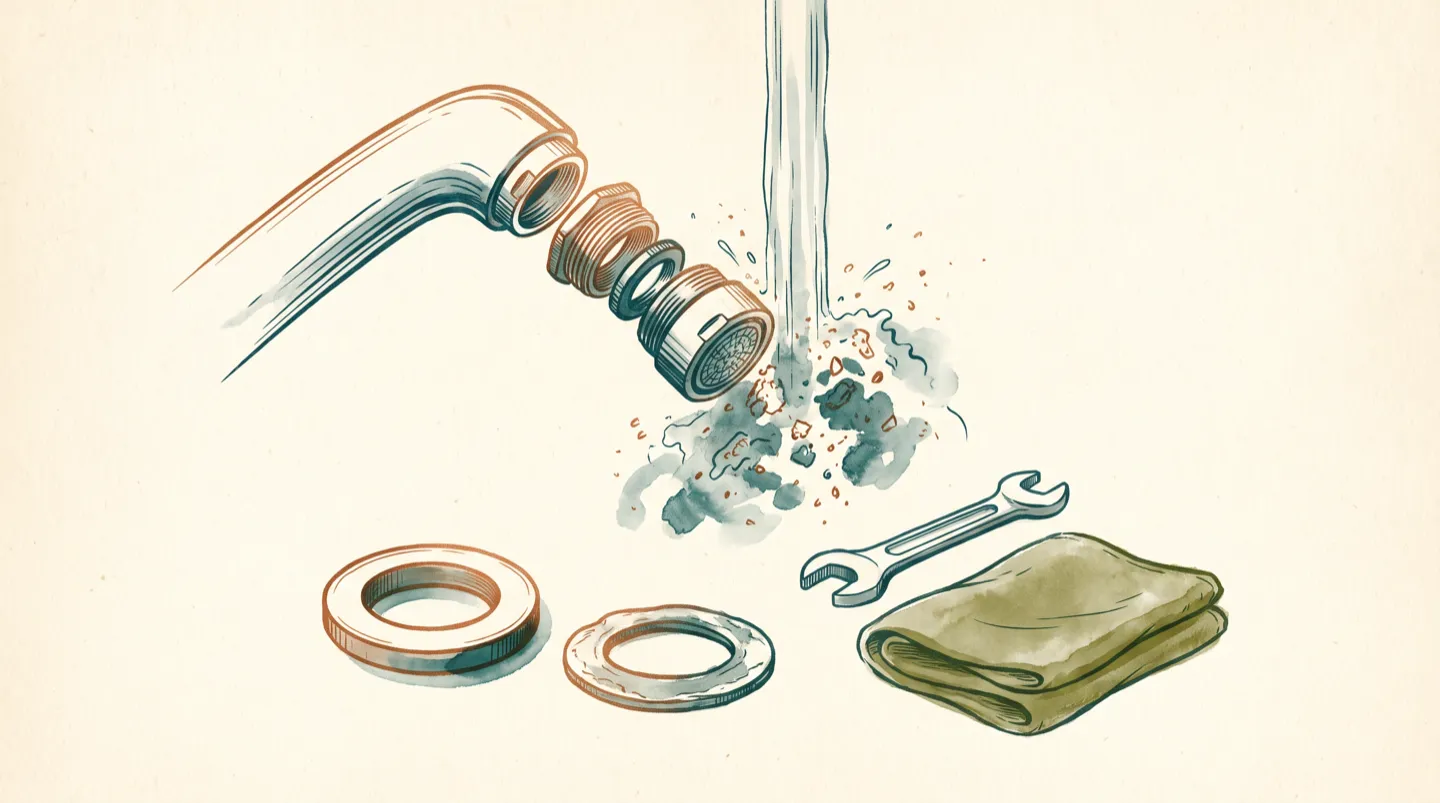
Most taps do not fail. They are neglected until a small, cheap fault becomes a drip, then the drip becomes wear on the seat, then the wear becomes a job. The entire logic of preventive maintenance is to interrupt that chain early, while it still costs a cloth and five minutes. Here is what actually earns its place in a home tap-care routine, and what each habit is really doing.
Wipe it, and keep the abrasives away
A weekly wipe with a soft cloth and a mild cleaner is not about shine. It clears the film of soap, minerals and grime that otherwise dries into scale around the base and the handle, the exact places where grit works into moving parts. The rule that matters more than the wiping: keep harsh chemistry and abrasives off the tap. Bleach, ammonia, strong acids and scouring pads pit chrome plating and degrade the rubber seals inside, which is precisely the wear you are trying to prevent. A soft cloth and, for stubborn scale, a little diluted white vinegar left to sit and then rinsed off, do the job without shortening the tap's life in the process.
Rinse the aerator
The aerator is the small screen at the tip of the spout, and it is the single highest-value part to maintain. Mineral scale and grit collect there first, which shows up as a weak or spitting flow long before anything else goes wrong. Unscrew it by hand (or with a cloth-wrapped plier so you do not mark it), rinse the screen, soak it in white vinegar if it is scaled, and refit it. A clean aerator restores the flow, keeps the tap running at its rated efficiency, and improves the look and taste of the first water out of the spout. Every few months is plenty for most homes.
Replace the washer before it fails, not after
A dripping tap is almost always a hardened washer or a worn seal, and those parts cost a few cents. Replacing them promptly is the core of tap maintenance for one blunt reason: a tap left to drip does not just waste water, it wears its own brass seat as the water cuts across it, and a worn seat turns a five-minute washer swap into a reseating or a cartridge replacement. Fixing the drip early is cheaper twice over, in water and in the repair. Sydney Water puts a steadily dripping tap at up to around 12,000 litres a year, so the wasted water alone repays the attention.1
A tap that has just started to drip is at the cheapest point it will ever be to fix. The same tap ignored for six months is often a worn seat and a bigger job. In most states a washer is yours to change as routine upkeep; the moment a job goes past the washer or touches the supply it is a licensed plumber's, and your state regulator has the exact boundary.
Keep house pressure in check
The one invisible thing that quietly shortens the life of every tap and fixture in the house is excessive water pressure. The Australian plumbing standard, AS/NZS 3500.1, requires that static pressure at any outlet inside a building does not exceed 500 kPa, and new work fits a pressure limiting valve to hold it there.2 If your taps hammer when you shut them, or fixtures across the house keep failing early, high pressure is a prime suspect, and a licensed plumber can measure it and fit or adjust a pressure limiting valve. Getting the pressure right is maintenance for the whole system at once.
Filtered and instant-boiling taps: follow the schedule
If your kitchen has a filtered or instant-boiling tap of the kind that dispenses chilled, filtered or near-boiling water, it carries a replaceable cartridge or filter that the manufacturer schedules by volume or by time. Changing it on schedule is the whole maintenance story for these units: a spent filter stops improving the water and can start affecting its taste. Follow the maker's interval rather than waiting for a symptom, and leave any work on the unit's plumbing or heating element to a licensed plumber.
When a tap does reach the end
Some taps are past economic repair, and replacement is the honest call. When that day comes, the maintenance-minded choice is a tap with a good WELS water-efficiency star rating: the star label on Australian tapware is a legally required, comparable measure of how much water a fixture uses, and a higher rating means less water down the drain for the life of the tap.3 On new products from 1 May 2026, look for the Lead Free WaterMark too, which is now required on tapware that carries drinking water. The best-maintained tap is ultimately the one chosen well and then simply kept clean, checked, and re-washered on time.
This entry sits under our guide to leaking taps, which covers tap anatomy and why some taps start dripping again soon after a repair. For the wider water-saving picture, see the sustainable plumbing guide.
If a tap is dripping, spitting or getting harder to turn and you are not sure whether it is a washer or something more, describe it at our enquiry desk and we will point you to a sensible next step.
Sources
- Sydney Water: Water saving tips. Sydney Water's household water-efficiency guidance supplies the dripping-tap figure and names worn washers and seals as the usual culprits; how much a given tap loses depends on its drip rate.
- Plumbing Code of Australia, Australian Building Codes Board. AS/NZS 3500.1 (Water services) reaches every state through the Plumbing Code; it is the source of the 500 kPa outlet cap and the pressure-limiting requirement on new work. The standard is paywalled; the ABCB page explains its scope.
- Water Rating (WELS), the Australian Government's Water Efficiency Labelling and Standards scheme. Star ratings on taps and other fixtures are a legally required, comparable measure of water efficiency, useful when a worn tap is due for replacement.