Installing and renovating: what you choose, and what a plumber signs off
A single tap, a new hot water system, a whole bathroom: every installation is really two jobs. One is a set of decisions only you can make, about pipe, fixtures and how the water will run. The other is the connection itself, which in Australia is licensed work that ends in a certificate. This guide covers both halves, so the choices stay yours and the compliance stays sound.
Updated 16 July 2026 · Reading time approx. 17 min
01 The two halves of the job
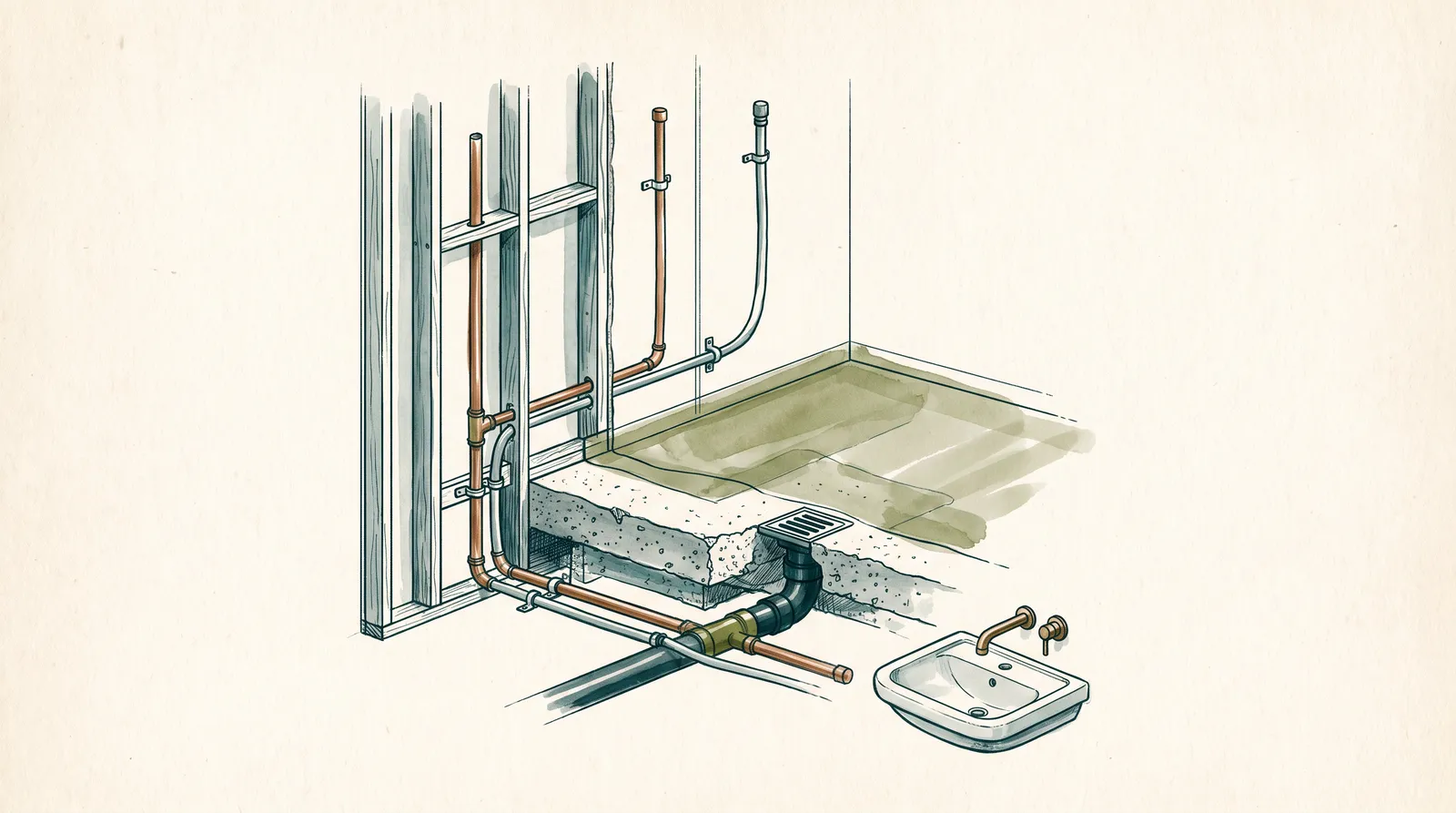
It helps to see any plumbing installation as two separate jobs that happen to share a worksite. The first is the decisions: what pipe runs in the wall, which fixtures go on it, how the layout falls, what standard of tap or hot water system you are prepared to live with for the next fifteen years. The second is the connection: the physical joining of all of it to your water supply and drainage, which the law reserves to a licensed plumber and which finishes with a certificate that says it was done to standard.
The split matters because the two halves fail in different ways. A decision you get wrong, a mean-spec tap, an inefficient hot water system, a layout that fights the house, costs you slowly and is annoying to change. A connection done wrong floods a wall, scalds a child, or siphons drain water back toward the drinking supply. This guide spends most of its time on the decisions, because those are genuinely yours, and it is plain throughout about where the licensed line sits, because that is not.
Underneath both halves is one framework. Plumbing and drainage in Australia is governed by the AS/NZS 3500 series of standards, applied nationally through the Plumbing Code of Australia. When a plumber says an installation is "compliant", that is not a sticker: it means the drinking water is protected from contamination, the drainage is vented and laid on the right fall, and hot water is delivered at a safe temperature. The rest of this guide is really an explanation of what those three things take.
The facts panel
- Governing standards
- AS/NZS 3500 series
- Applied nationally through
- Plumbing Code of Australia
- New or altered water/drain work
- licensed work
- Stored hot water, minimum
- 60 °C
- Delivered to a bathroom, maximum
- 50 °C
- Efficiency labelling scheme
- WELS
The 60 and 50 degree figures are the storage and delivery limits set for heated water services under AS/NZS 3500.4; see sources below.
02 Choosing the pipe
The pipe in the wall is the one material decision that outlives every fixture bolted to it, and the one you are least likely to think about. Your plumber usually picks it, but it is worth understanding, because it drives how long the system lasts, how a future repair behaves, and whether an old house is hiding a bigger job than the quote assumed.
Copper is the proven default: it takes heat and pressure without complaint, lasts fifty years and more, naturally resists bacterial growth, and is fully recyclable at the end of its life. It costs more as a material and needs skilled joining, which is part of why the flexible plastics have taken so much of the new-build market.
PEX (cross-linked polyethylene) is the flexible plastic supply pipe that dominates new homes. It runs in long continuous lengths with far fewer joints, which means fewer places to leak; it tolerates a light freeze that would split copper; and it is fast to install. Its limit is sunlight: it degrades under UV, so it is not for exposed outdoor runs.
PVC and uPVC are the workhorses of cold water and, above all, of the drain, waste and vent lines that carry water away. Standard PVC is not for hot pressurised supply; where a plastic hot line is wanted, it is the chlorinated version (CPVC) or a return to copper or PEX.
Galvanised steel is the legacy supply pipe of older homes, and mostly a thing to recognise rather than choose. It corrodes from the inside over decades, the bore closing in on itself and the water picking up rust and a metallic taste. Found during a renovation, it is usually replaced rather than extended, which is a common source of the "while we were in there" line on a final invoice.
Cast iron is the old drainage equivalent: heavy, genuinely quiet under flow, long-lived, but prone to rusting through and to cracking as the ground moves.
| Material | Mostly used for | Character | Worth knowing |
|---|---|---|---|
| Copper | Hot and cold supply | Proven, 50+ years, recyclable | Higher material cost, skilled joins |
| PEX | Hot and cold supply | Flexible, fast, few joints | Degrades in sunlight, indoor runs |
| PVC / uPVC | Cold supply, all drainage | Cheap, light, corrosion-proof | Not for hot pressurised lines |
| Galvanised steel | Legacy supply (pre-1980s) | Corrodes and narrows internally | Usually replaced, not extended |
| Cast iron | Legacy drainage | Quiet, durable, heavy | Rusts through, cracks with movement |
Where two different metals meet, copper hard against galvanised steel especially, they corrode each other by galvanic action and the joint weeps in a few years. A dielectric fitting between them is the fix. It is a plumber's call, but it explains why a small repair on old mixed pipework sometimes turns into replacing a longer run than you expected.
03 Fixtures that fit your water
Two things decide whether a fixture performs once it is in: the water pressure it has to work with, and how efficiently it is designed to use it.
Pressure first. Every tap, shower and appliance is built for a pressure range. A large rain-head shower fed by a low-pressure system dribbles; a fitting designed for gentle pressure fed by high mains can hammer, spray or leak at the seals. Knowing roughly what your home runs at, which a plumber measures in a couple of minutes, is worth doing before you fall in love with a fixture in a showroom.
Then efficiency, which in Australia means WELS. The Water Efficiency Labelling and Standards scheme has been mandatory since 2006: taps, showers, toilets, urinals, dishwashers and washing machines sold here must carry a WELS label. It shows a star rating, more stars meaning less water, and a consumption figure, litres per minute for a tap or shower, litres per flush or per cycle for a toilet or appliance. If you have seen the United States "WaterSense" mark quoted online, that is a different country's scheme; WELS is the one that applies here.
Treat the star rating as a running-cost lever, not a green badge. The gap between a three-star and a six-star showerhead is water you pay for, and heat you pay for, on every shower for the life of the fixture. The one honest caveat: a very low-flow fixture on a long hot-water run can mean a longer wait for hot water, so efficiency is a whole-system choice, not a per-tap one.
Durability, last. A fixture with a published warranty and serviceable parts, a tap you can re-washer rather than a sealed cartridge you replace whole, is the one still working when the bargain version is landfill. And match finishes to your water: some plated finishes pit and spot in hard water.
04 Hot water: the biggest decision in the house
A typical Australian home spends more energy heating water than on almost anything else it does, and the system you install is one you keep for ten to fifteen years. That combination makes it the highest-value decision on this page, and the one most worth slowing down for. There are four ways a house makes hot water, and they are genuinely different, not just different brands of the same thing.
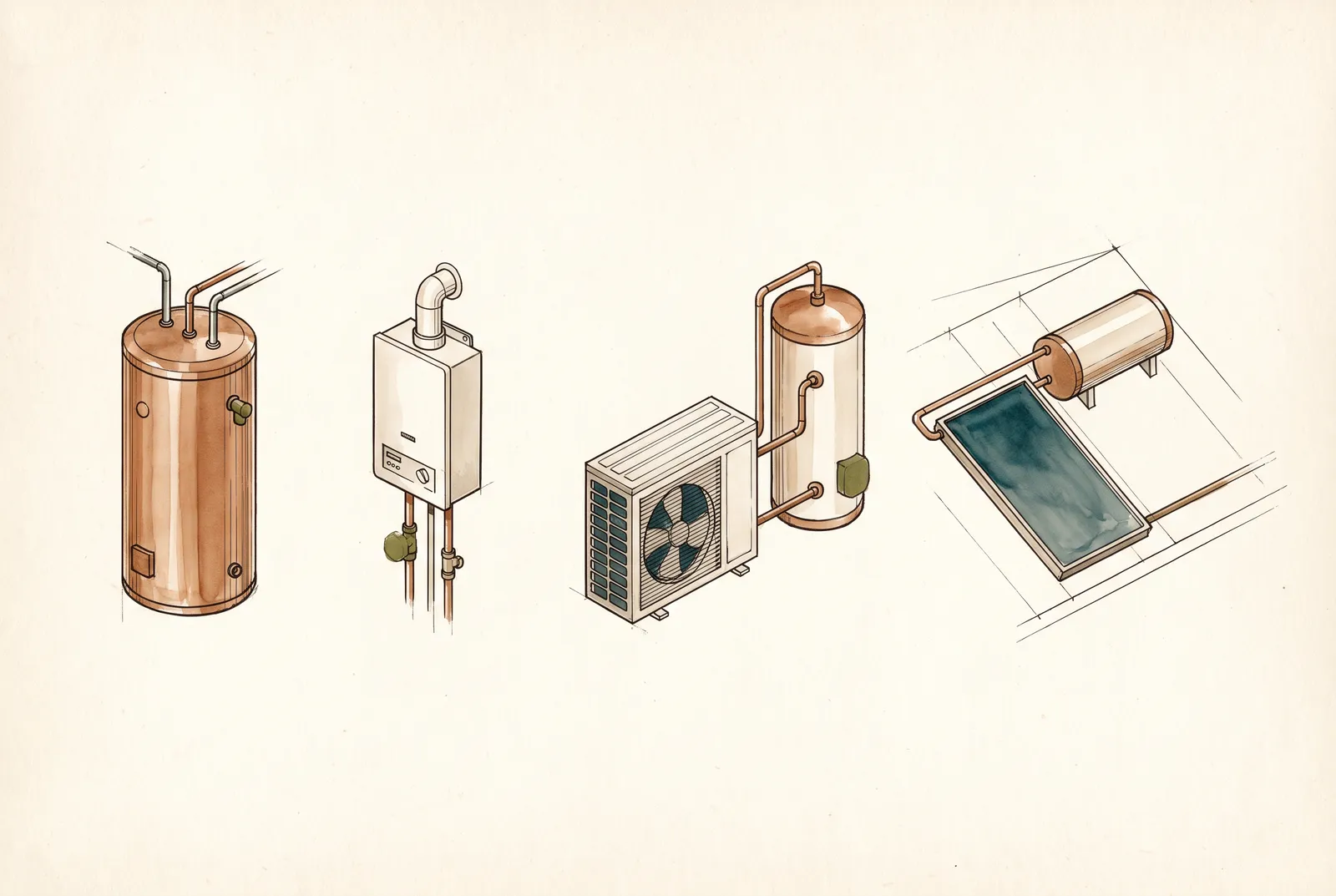
Electric storage is the cheapest to buy and, on a standard continuous tariff, the most expensive to run: a resistive element heats a tank and holds it hot, losing a little heat all day. It improves sharply on a controlled off-peak tariff, or when it soaks up daytime output from rooftop solar panels.
Gas suits homes with mains gas connected. A continuous-flow (instant) unit heats water only as it is drawn, so there is no standing tank loss; a gas storage unit keeps a tank hot like the electric one. Running cost tracks the gas price, which is worth watching as the economics of gas shift.
Heat pumps are the quiet revolution: an electric system that moves heat out of the surrounding air rather than making it from scratch, so it delivers the same hot water for roughly a third of the electricity of a plain electric element. The trade-offs are honest ones, a higher purchase price, a need for ventilated space, and some fan noise, and it is eligible for the rebates below.
Solar thermal puts a collector on the roof to heat the water directly, with a storage tank and an electric or gas booster for cloudy stretches. It has the highest upfront cost and the lowest running cost of the four, it depends on your roof and climate, and it too attracts rebates.
| System | How it heats | Running cost | Best suited to |
|---|---|---|---|
| Electric storage | Element heats a stored tank | High on continuous, low on off-peak | Low upfront budgets, off-peak or solar PV |
| Gas (storage or continuous) | Burns gas, on demand or stored | Tracks the gas price | Homes with mains gas connected |
| Heat pump | Moves heat from the air | Low, about a third of plain electric | Most homes with a ventilated spot; rebate-eligible |
| Solar thermal | Roof collector, with a booster | Lowest, weather-dependent | Good roof and climate; rebate-eligible |
Rebates are real, and named, not priced here. Heat pump and solar hot water systems are eligible for small-scale technology certificates under the federal Small-scale Renewable Energy Scheme, and several states and territories run their own hot water rebates on top. The value changes, so we point you at the scheme and let you check the current figure rather than quote one that dates.
Size to your household, not to the biggest tank that fits. Sizing matches the tank (or the flow rate, for continuous gas) to your peak demand, the family's stacked morning showers, not to a round number. Oversize and you pay to keep water hot you never use; undersize and someone showers cold. This is exactly the calculation a plumber does from your household and your fixtures.
Whether solar in particular earns its higher upfront cost depends on your roof, your climate and how you actually use hot water. Our study on whether solar hot water is worth the investment works through that honestly, including the years it takes to pay back and the cases where a heat pump is the better call.
Every hot water changeover is licensed work: it combines mains pressure, water stored hot enough to control bacteria, and either fixed electrical wiring or gas. On gas it is doubly so, a gas fit-off needs a separate gas licence. This is not a homeowner install in any state.
05 The parts that make it compliant
A good installation carries a handful of components that are invisible when they work and expensive when they are missing. You will not fit these yourself, but knowing they exist is how you tell a proper job from a cheap one, and how you read the small leaks and smells that a new installation sometimes throws.
The tempering valve is the one the standards care about most. Hot water is stored at 60 degrees or hotter to kill Legionella bacteria, but water that hot scalds a child in well under a second. A tempering valve (or a thermostatic mixing valve) sits after the heater and blends in cold water so the temperature reaching a bathroom outlet is capped at 50 degrees. It is required, and it is the reason your tank runs hotter than your shower.
Ventilation is the quiet half of the drainage system. Every drain needs air behind the water: vent pipes let air in and out so that a sudden rush of water cannot siphon the seal out of a nearby trap. When a brand-new bathroom gurgles or smells, poor venting is the usual cause, the traps are losing their seals and letting drain air into the room. It is designed in, not added later.
Expansion control answers a question people ask about their new hot water system: why does a valve on it drip? Water expands as it heats. In a modern "closed" system, held shut by a non-return or pressure-limiting valve, that expansion has nowhere to go, so an expansion control valve or a small expansion tank absorbs it. Without one, the heater's pressure relief valve weeps continuously to cope, which reads as a fault and is really a missing part.
Backflow prevention stops used or contaminated water being drawn back into the drinking supply if the mains pressure ever drops. It is required at the connections that pose the risk, an outdoor tap, an irrigation line, a commercial fitting, and it is one of the clearest examples of why "just connecting a hose point" is regulated at all.
06 Renovating: sequence, permits and wet areas
A renovation is where fresh installation decisions collide with an existing house, and it is where budgets quietly blow out. Three things decide how smoothly it goes, and all three are settled before the first tile.
Inspect before you design. An inspection of the existing pipework, its material, its condition, whether it meets current code, before you commit to a new layout heads off the classic renovation shock: opening a wall to find galvanised supply pipe that has to be replaced whether your new bathroom wanted it touched or not.
Understand the sequence: rough-in, then fit-off. Rough-in is all the in-wall and in-floor pipework, done before the room is lined and tiled. Fit-off is mounting the visible fixtures at the very end. The expensive lesson lives in between: anything that moves a wet area, relocating the toilet, shifting the shower, means re-running drainage under the floor on the correct fall. That is why "just moving the vanity to the other wall" can cost many times a like-for-like swap. Keeping fixtures close to the existing drainage is the single biggest budget lever a renovator actually controls.
Permits and certificates. New and altered plumbing is licensed work, and the drainage side in particular ends with a compliance certificate. Requirements differ between states and territories, so the honest instruction is to check what your state's plumbing regulator asks for, and to make sure whoever quotes the job includes it.
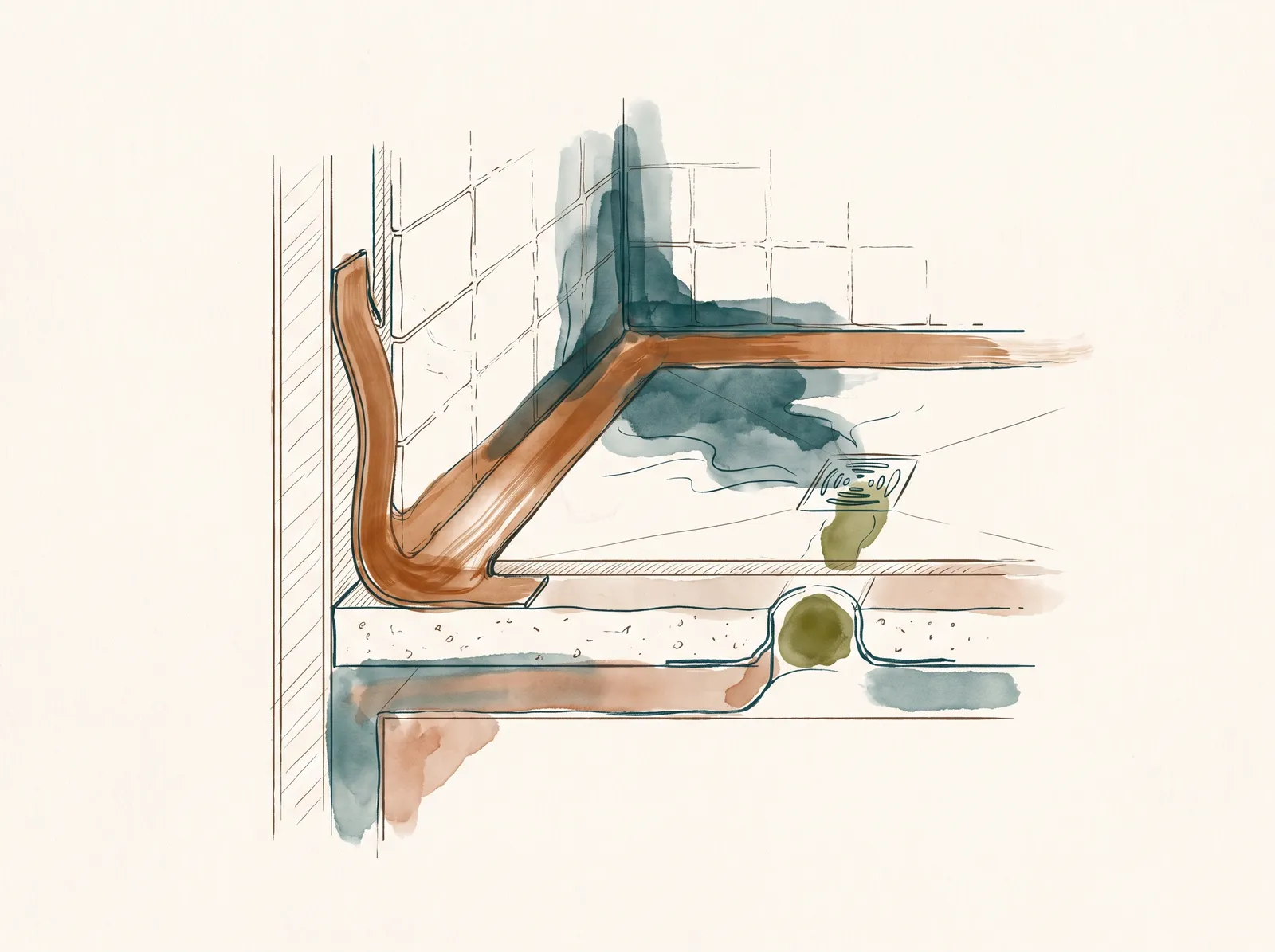
Wet-area waterproofing is the hidden layer that decides everything. A continuous waterproof membrane, behind the tiles, across the floor, turned up the walls and sealed at every junction, is what stops water tracking into the framing and slab. It has its own Australian Standard, it is laid before tiling, and once the tiles are on it cannot be repaired without demolishing the room. That is why a leak from failed waterproofing is the most expensive mistake a bathroom can hide: it shows up as rot two years later and takes the whole room with it. The membrane, and the flexible sealing at every movement joint, is specialist work in its own right. In Newcastle and the Hunter, Rilla Sealing and Finishes does exactly this, wet-area membranes, shower reseals and the movement joints that keep them intact; elsewhere, the question to ask any bathroom renovator is simply who does the waterproofing, and to what standard.
Design for the long term while the walls are open. If this is a forever home, accessible design costs almost nothing at rough-in and a fortune to retrofit: lever taps, a hobless (step-free) shower, timber backing built into the wall where a grab rail might one day go, and generous clearances. Deciding it now, before the walls close, is the whole trick. The same logic applies to materials, choose durable, low-toxicity, water-efficient fittings, and where you can, recycled or recyclable ones. The long-life choice and the sustainable choice usually turn out to be the same choice.
07 What goes wrong, and what it costs
Most installation failures are a short list, and each one has a characteristic cost. Read this as the price of the corner nobody should cut.
Plumbing done by an unlicensed person is illegal, comes with no compliance certificate, and can void your home insurance if it later causes damage. The labour you save is dwarfed the first time an uninsured leak claim is knocked back. This is the mistake that turns a few hundred dollars saved into a five-figure loss.
Skipped or rushed waterproofing. The leak you do not see for two years, then a rotted floor, black mould and a full re-do. The cheapest layer to get right, the most expensive to get wrong, covered in section 06 for exactly that reason.
The wrong fall on a drain. Drainage laid too flat lets solids drop out of a lazy flow and build up; laid too steep, the water outruns the solids and leaves them behind. Both block. A recurring blockage in an otherwise new installation is often a fall that was never right.
No isolation valves. A quality install puts a small shut-off valve at each fixture, so a future tap repair isolates one basin instead of the whole house. Their absence turns a ten-minute washer change into a mains-off, whole-home ordeal, and tempts the next person to defer the repair and let a drip run.
Bargain fixtures with no spare parts. The cheap mixer with a sealed cartridge and no serviceable washer becomes landfill in a few years; a serviceable fixture is brought back to life for the cost of a seal. The saving at the checkout is repaid, with interest, at the tip.
Two smaller mistakes worth naming: cross-threaded or over-tightened fittings that weep slowly rather than fail outright, and mismatched metals that corrode at the join (section 02). Both hide for months. A new installation that develops a faint, persistent damp smell or a stain near a joint is worth a look before it becomes a section 07 story of its own.
08 The licensed line, and what to ask
Here is the split made explicit, because it is the most useful thing on this page. Some of an installation is genuinely yours to do; the rest the law reserves to a licensed plumber, and a licence exists precisely where a mistake reaches the drinking water, the drainage or a gas line.
Yours, no licence needed: choosing fixtures and materials, planning the layout, setting the budget, buying WELS-rated products, and the small cosmetic jobs that do not touch the water or drainage, changing a shower head, cleaning or replacing a tap aerator, swapping a toilet seat, painting around it all.
A licensed plumber's, always: any new or altered water supply or drainage connection, installing or replacing a hot water system, and, in most states, connecting a dishwasher or washing machine to the water and drain. Anything involving gas needs a separate gas licence on top. And the compliance certificate that proves the work meets standard can only come from the licensed person who did it.
The exact line between "maintenance you may do" and "installation you may not" varies by state and territory, so the safe rule is the simple one: if it joins to the water or the drain, assume it is licensed work and check your state's plumbing regulator. No single national sentence gets the detail right, and this site will not pretend otherwise.
When you do engage an installer, a few questions separate the ones selling a method from the ones selling a guess:
- Are you licensed for this work, and will I receive a compliance certificate?
- What pipe and fixtures are you proposing, and why these for my place?
- On the hot water, is there a tempering valve and expansion control?
- Where will the isolation valves be?
- For a bathroom: who does the waterproofing, and to what standard?
If you are not sure which of your job is which, that is exactly what the enquiry desk is for. Describe what you are planning and we will point you at the right questions and the right kind of licensed tradesperson, without quoting, booking or promising anything.
09 Smart and sustainable additions
While the walls are open is the cheapest time to add the extras worth having. Here they are, honestly rated, because some earn their keep and some are a brochure.
Sensor and touchless taps give a real hygiene and water-saving benefit in high-traffic and commercial settings, where hands do not touch the tap and the flow stops the moment they leave. In a home they are a nice-to-have that needs a power supply and, now and then, a solenoid service.
Leak detection and smart shut-off is the genuinely useful one. A valve on the main watches the flow signature and closes automatically when it sees the pattern of a burst pipe or a toilet stuck running, which is worth real money in a home left empty or full of concealed pipework. Its honest limit: it protects against catastrophic flow, not a slow weep behind a wall.
Water softeners earn their place in genuinely hard-water areas, scale on the kettle, spotting on the glassware, appliances failing early, where softening measurably extends the life of everything hot water touches. Where your water is already soft they are a pointless ongoing salt cost. Test the water before you plumb one in.
Greywater and rainwater reuse, bath and laundry water to the garden, roof runoff to the toilets and taps outside, is a real efficiency gain in the right home. Both need correct plumbing, backflow protection and sometimes council approval, which is precisely why they are an installation decision and not a weekend project.
Smart-home integration ties the sensors, valves and monitoring together so your plumbing can report to you. What is real and what is marketing is worth reading before you spend: our study on smart home integration in plumbing installations works through the features that genuinely save water and the ones that mostly add an app.
The thread running through all five is the thread running through this whole guide: each is a decision you make and a licensed plumber installs, and the sustainable choice and the durable choice keep turning out to be the same one, less water, less energy, longer life.
10 Questions, answered
Do I need a licensed plumber to install a new tap or toilet?
For the connection, yes. Choosing and buying the fixture is entirely yours, and small maintenance like changing a shower head or a tap aerator is fine, but joining a new tap, toilet or appliance to the water supply or drain is licensed work in Australia and finishes with a compliance certificate. Section 08 sets out where the line sits and why it varies a little by state.
Which hot water system is cheapest to run?
A heat pump or solar thermal system, comfortably. A heat pump uses roughly a third of the electricity of a plain electric element because it moves heat rather than making it; solar has the lowest running cost of all but depends on your roof and climate. Electric storage on a continuous tariff is the most expensive to run. Both the heat pump and solar are eligible for rebates, and the trade-offs are laid out in section 04.
What does the WELS star rating actually mean?
More stars means the fixture uses less water: the scale runs to six. The same label also carries the real consumption figure, litres per minute for a tap or shower, litres per flush or cycle for a toilet or appliance, so two fixtures with the same star count can still differ. It is a running-cost lever, not just an environmental badge, because the water you save on the hot tap is also energy you save heating it.
Why is my new hot water system dripping from a valve?
Usually a missing or undersized expansion control. Water expands as it heats, and in a modern closed system that pressure has nowhere to go unless an expansion control valve or small tank absorbs it. Without one, the heater's pressure relief valve weeps continuously to cope, which looks like a fault and is really a missing part (section 05). A licensed plumber diagnoses it in minutes; it is not something to accept as normal.
Can I move my toilet or shower to a new spot in a renovation?
You can, but it is the decision that moves the budget most. Relocating a wet area means re-running drainage under the floor on the correct fall, which is far more work than swapping a fixture in place. Keeping the toilet, shower and basin near the existing drainage is the single biggest saving a renovator controls; spend the moves where they genuinely improve the room.
Copper or PEX for a new home?
Both are good, modern supply materials and the choice is usually the plumber's. Copper is proven, handles heat and pressure, and is fully recyclable; PEX is flexible, installs fast with fewer joints and tolerates a light freeze, but must stay out of sunlight. What matters more than the material is that it is installed to standard, with isolation valves and no mismatched-metal joints (section 02).
+ The studies behind this guide
Two journal entries carry this guide's deeper dives, each kept at its original address and date:
11 Check your symptom
Installation decisions often start with something already going wrong, a hot water system on its last legs, weak flow at a new fixture. Pick what you are seeing for the mechanism and an honest severity read, then send us the specifics.
The interactive desk needs JavaScript, but the enquiry desk does not: describe the job or the fault and we will point you in the right direction.
Sources
- Water Efficiency Labelling and Standards (WELS) scheme, Australian Government. The mandatory water-efficiency label, its star ratings and consumption figures, cited in the fixtures section above.
- Plumbing Code of Australia, Australian Building Codes Board. The national framework through which the AS/NZS 3500 standards apply, including AS/NZS 3500.4 (heated water services), the source of the 60 degree storage and 50 degree delivery figures. The standards themselves are paywalled; the ABCB page describes their role and scope.
- YourHome: Hot water service, the Australian Government's guide to environmentally sustainable homes. Background for the hot water system comparison and the "largest energy use" framing.
- Small-scale Renewable Energy Scheme, Clean Energy Regulator. The federal scheme under which heat pump and solar hot water systems earn small-scale technology certificates; the current value changes, which is why no figure is quoted here.
Tell us what your plumbing is doing
Describe the symptom, the fixture and how long it has been going on. We read every enquiry and reply with guidance and a sensible next step. Anything that needs tools is a licensed plumber's job, and we will say so plainly.