How to reduce water usage at home, in the order that matters
Most water-saving lists are a jumble of thirty tips of wildly different value. This one is ordered, because the order is the useful part: fix what leaks, then change what pours, then change what you do, then look outside. Small fixes, whole house.
Published 29 August 2024 · Reading time approx. 9 min
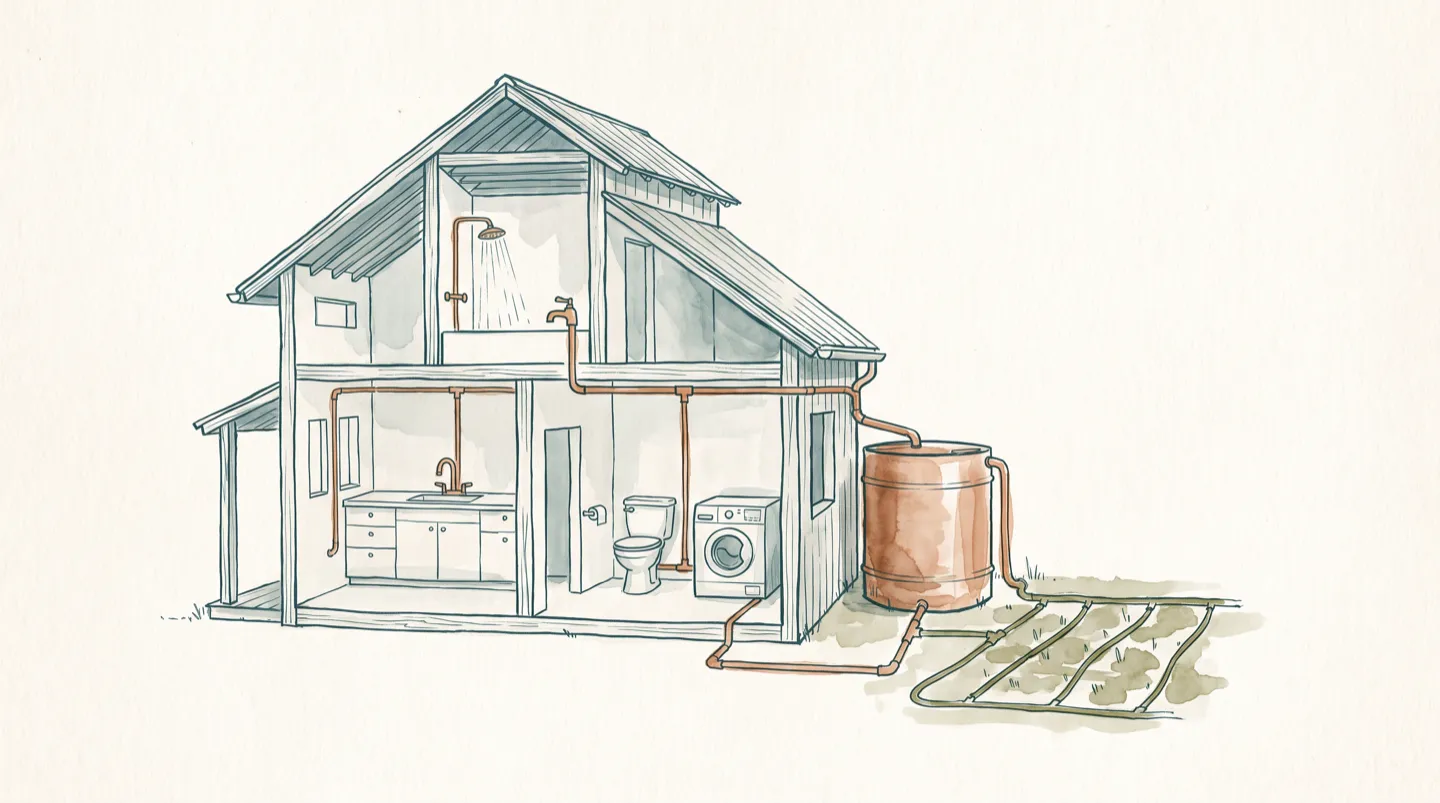
The average Australian household uses a large share of its water indoors, on the shower, the toilet, the taps and the washing machine, with the garden the big swing factor in summer. That tells you where to spend your attention. What follows is arranged by return on effort, from the fix that costs nothing to the upgrades that earn a plumber's visit.
1. Fix the leaks first, because they cost nothing to find
The cheapest litres you will ever save are the ones already escaping. A single dripping tap wastes up to around 12,000 litres a year, and a silently leaking toilet wastes several times more because nobody hears it.1 Walk the house: check taps, showerheads and under-sink connections for damp, and test each toilet by putting a few drops of food colouring in the cistern and waiting twenty minutes without flushing. If colour creeps into the bowl, the flush valve is leaking. Replacing a tap washer is basic maintenance in most states; work on the supply pipework itself is licensed. Fixing leaks comes first because it is free to look and the saving is immediate.
2. Change what pours: fixtures, and the label that chooses them
Once nothing is leaking, the biggest indoor saving is in the fittings that run every day. Australia makes this easy, because taps, showerheads, toilets, dishwashers and washing machines all carry a mandatory WELS label: a star rating for water efficiency and a figure for how much water the product uses. More stars is less water for the same job, and the label lets you compare like for like at the point of purchase.2
Three swaps do most of the work. A water-efficient showerhead uses in the order of 6 to 7.5 litres a minute against 15 to 25 for an old unfettered head, and modern ones hold the pressure by mixing in air, so the shower still feels full. An aerator, the small screen at the tip of a tap, costs little and cuts flow the same way without changing how you use the tap. A dual-flush toilet gives you a small flush for the common job and a full one only when needed. None of these ask you to change a single habit, which is why they are the highest-value upgrades in the house.
Put a bucket under the shower and run it for fifteen seconds, then multiply the litres by four. If your showerhead is delivering more than about ten litres a minute, a WELS-rated replacement is the single fastest saving you can make, and it screws on in minutes.
3. The kitchen, where habit and hardware meet
The kitchen rewards a mix of small upgrades and small habits. An aerator on the kitchen tap and a flow-restricting valve keep everyday tasks from running wide open. A modern dishwasher is genuinely water-efficient, using far less per wash than doing the same dishes by hand under a running tap, but only when you run it full, so wait for the load. Rinse vegetables in a bowl rather than under a running tap and tip the water on the garden. Keep food scraps out of the sink and into a compost bin, which saves the water otherwise used to flush a disposal and feeds the garden besides.
One kitchen upgrade is worth naming because it saves a hidden waste: a hot-water recirculation system. Much of the water lost at a kitchen sink is the cold slug you run off while waiting for the hot to arrive. A recirculation system keeps hot water ready at the tap so that cold run-off shrinks. It is a genuine saving, and because it is a permanent change to the hot-water pipework it is a licensed plumber's job to install.
4. Change what you do: habits that compound
Hardware has a ceiling; habits do not. Turn the tap off while brushing your teeth or shaving rather than letting it run. Take a shorter shower, since on an efficient head every minute is still several litres. Run dishwashers and washing machines only on full loads, and choose the eco or shortest suitable cycle. When you wash dishes by hand, fill one side with wash water and the other with rinse rather than running the tap. Each of these is trivial on its own and substantial across a year, and a household that shares the habit saves far more than one person trying alone.
5. The garden: the biggest summer variable
Outdoor use is where a household's water can double over summer, and where a few choices swing it hard. Water early in the morning or late in the evening so less is lost to evaporation. Deliver water to the roots with a drip line or soaker hose rather than a sprinkler that throws it into the air and onto paths. Mulch garden beds to hold moisture in the soil. Over time, choosing native or drought-tolerant plants cuts the need for watering at all. A rainwater tank plumbed to the garden, and where permitted to the toilet and laundry, replaces treated drinking water with rain you would otherwise send down the stormwater drain; connecting a tank into the house supply is licensed work.
6. Let technology catch what you cannot
The last layer is for the losses that hide. Smart leak detectors and smart water meters watch the flow into the house and flag the unusual: a continuous overnight trickle that means a running toilet or a slab leak, a spike that means a burst. Because so much wasted water is water nobody hears, this is where monitoring earns its place, often catching a leak weeks before a bill would. Weather-based irrigation controllers skip a watering when rain is forecast or the soil is already wet, which stops the single most common outdoor waste, watering in the rain. Sensor taps that run only while hands are under them save most in busy shared bathrooms.
Greywater systems, which treat water from showers, basins and the laundry for reuse on the garden, are the most powerful reuse technology and the most regulated: greywater use is governed by state and local health rules, and a permanent diversion or treatment system must be installed by a licensed plumber to those rules. It is a real saving, done properly, and a health risk done casually.
This entry sits under our guide to sustainable plumbing, which maps where a house wastes water and the order to fix it across the whole system.
If you are weighing up which upgrades are worth it for your house, or you suspect a leak you cannot find, describe your situation at our enquiry desk and we will point you to a sensible next step. The fixture swaps are yours to make; anything that changes the pipework is a licensed plumber's job, and we will say so plainly.
Sources
- Water saving tips, Sydney Water. Source of the dripping-tap waste figure and the point that a leaking toilet wastes considerably more; the food-colouring cistern test is standard water-utility guidance for finding a silent toilet leak.
- Water Rating (WELS scheme), Australian Government. The Water Efficiency Labelling and Standards scheme makes the star rating and water-use figure mandatory on taps, showers, toilets, dishwashers and washing machines; the flow-rate ranges quoted here reflect the difference between WELS-rated and older unrated fixtures.