Smart plumbing, ranked by what it actually does
Most "smart home plumbing" coverage is a shopping list of gadgets. The useful frame is different: the smart plumbing worth installing is the kind that protects the house and cuts water waste. Everything else is convenience. Here is how to tell them apart.
Published 15 June 2024 · Reading time approx. 8 min
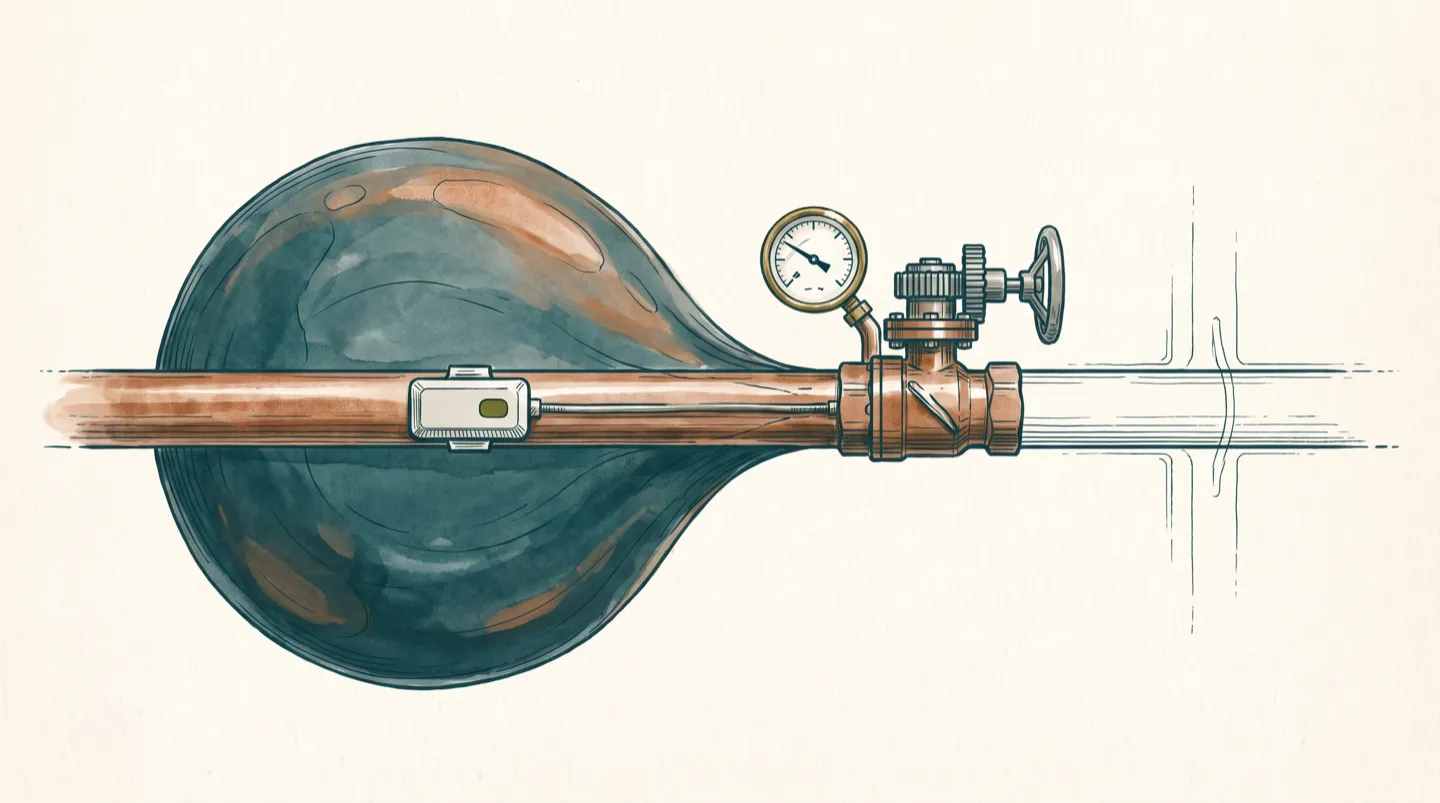
Connecting plumbing to a phone sounds like a novelty, and a lot of it is. But one strand of smart plumbing is genuinely valuable, because it targets the two things a house cannot afford to get wrong: an undetected leak, and water used when nobody is watching. Sort the products by that test and the picture gets clear fast.
The tier that earns its place: leak detection and shut-off
A burst flexible hose under a sink or a slow leak inside a wall can release water for hours before anyone notices, and water damage is one of the most common and expensive things that goes wrong in a home. The device that addresses this is a leak sensor: a small battery unit you place on the floor at the highest risk points, under the kitchen sink, behind the toilet, by the washing machine, near the hot water unit. The moment its contacts get wet, it alerts your phone. On its own that is useful, but it still depends on someone being home to act.
The version that actually protects the house pairs those sensors with an automatic shut-off valve fitted to the main water line. When a sensor trips, or when the system's flow monitoring sees water running continuously far longer than any normal use, a motor closes the valve and stops the supply to the whole house. That is the difference between a phone notification you might see in three hours and a leak that shut itself off in thirty seconds. This is the smart plumbing genuinely worth the money, and the reasoning is the same one that runs through all sensible water management: catching a fault early turns a large problem into a small one.
A stick-on leak sensor is a battery gadget anyone can place. An automatic shut-off valve is cut into the mains water line, and any work on the supply plumbing is licensed work in Australia. The sensors are yours to fit; the valve on the main is a plumber's job, and getting the valve reliable is the whole point of the system.
The tier that saves water: smart meters and irrigation
A smart water meter clamps to or fits into the incoming line and reports how much water the house is using, in near real time, broken down by pattern. Its value is not the live number, it is what the number reveals: a toilet that has been silently running overnight, a slab leak that shows as a house that never truly reads zero, an irrigation zone using far more than you thought. You cannot fix waste you cannot see, and a smart meter makes the invisible baseline visible.
Smart irrigation is the outdoor equivalent, and outdoors is where a surprising share of household water goes. A smart controller waters on the actual weather rather than a blind timer, skipping a cycle after rain and adjusting to the season, and soil moisture sensors let it water only when the ground is genuinely dry. Automating the garden this way routinely cuts outdoor use without the lawn noticing, which is the honest kind of saving: less water for the same result.
The tier that is mostly convenience
Then there are the fixtures: taps you start by voice, showers that preheat to a set temperature, toilets with heated seats and app menus. These are pleasant, and some carry real efficiency features, a touchless tap that only runs while your hands are under it wastes less than one left running. But be clear about what you are buying. The efficiency comes from the water saving design, which is measured by the WELS star rating every tap and toilet sold in Australia must carry, not from the smart features bolted on top.1 Judge a smart fixture first on its star rating; treat the app as a bonus, not the reason.
What to check before you commit
Three practical points decide whether smart plumbing helps or frustrates. First, power and connectivity: a leak system that protects the house has to keep working in the exact situations that matter, so favour devices with battery backup and check they alert even if the internet drops. A safety device that fails silent is worse than none. Second, compatibility: pick devices that work with a system you will actually keep, rather than a scatter of apps that each do one thing. Third, and most important, the install boundary. Batteries, sensors and controllers you can set up yourself. Anything cut into the water supply, the shut-off valve, an in-line meter, a plumbed fixture, is licensed plumbing, both because the law requires it and because a badly fitted valve on your main is a new leak waiting to happen.
This entry sits under our installation guide, which covers what "compliant" means for any new fixture and how the four hot water system types compare. For the wider picture of where a house wastes water, see the sustainable plumbing guide.
If you are weighing up leak protection for your own place and are not sure what your supply setup will take, describe it at our enquiry desk and we will walk you through the sensible order, and flag which parts a licensed plumber needs to do.
Sources
- Water Rating (WELS), the Australian Government's Water Efficiency Labelling and Standards scheme. Taps, toilets and showers sold in Australia carry a WELS star rating, the legally required and comparable measure of a fixture's water efficiency, smart features aside.