Burst or cracked pipe: who pays, what insurance covers and why pressure matters
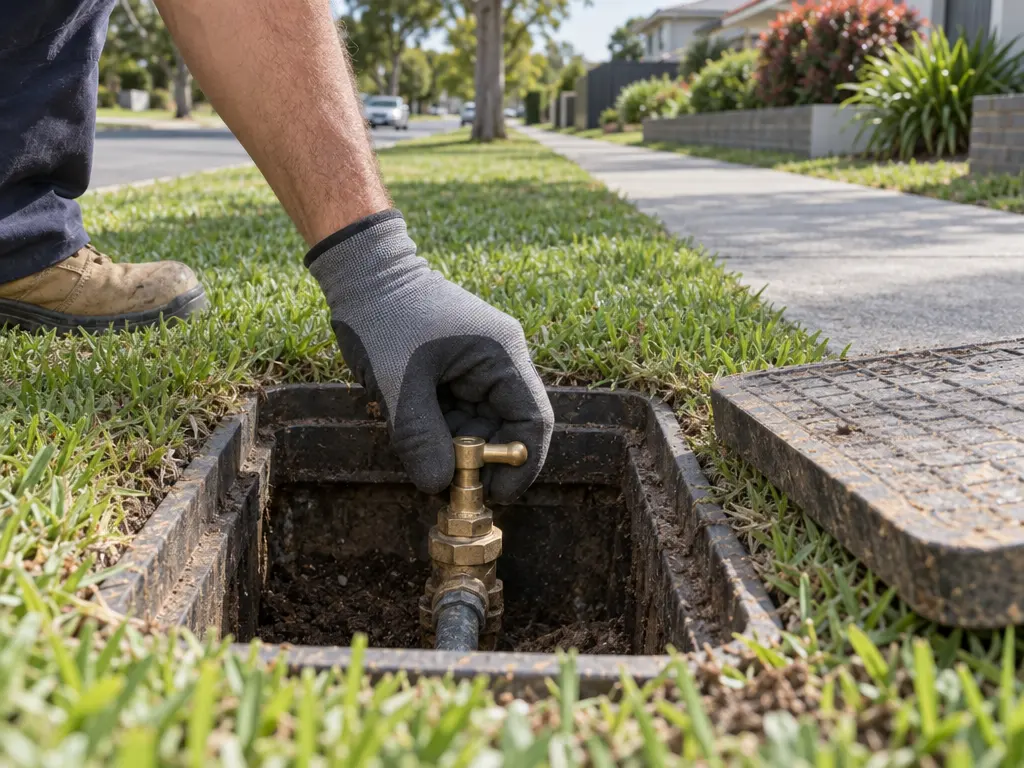
Close the mains tap at the meter first; under Yarra Valley Water's rules a burst on your side of the meter is yours to repair, and under Sydney Water's so is any pipe on the property, home insurance generally pays for the water damage rather than the pipe depending on your policy, and high water pressure can lead to breaks, so it is worth having checked.
Published 27 October 2026 · Reading time approx. 7 min
Put home insurance, a Victorian water utility and the WA water utility side by side, and none of the three pays to fix a burst pipe on your side of the meter:
- Escape of liquids insurance pays for the water damage, not for fixing or replacing the pipe.
- Yarra Valley Water will not reimburse internal pipe repairs.
- Water Corporation's leak allowance doesn't cover repair costs.
The repair is the owner's. What you may get back is narrower: damage if your policy covers it, part of the lost water where your utility runs an allowance, and in Victoria a plumber's diagnosis time if the leak proves to be the utility's.
That puts the weight on the first few minutes, because turning the water off quickly after a burst can drastically reduce damage. Earth Plumbing's first piece of advice is simple: find your mains tap today, while nothing is leaking.
Burst pipe: what to do in the first hour
The first hour, in order
- Close the mains tap, usually next to the water meter. Clockwise to close; if stuck, anticlockwise first, then clockwise. WA: still won't close? Water Corporation 13 13 75
- Open a low tap to drain the pipes
- Call a licensed plumber; call your utility too if the leak may be on its side
- Photograph the break and the damage
- Start drying out
Source: Water Corporation, CHOICE, Sydney Water
1. Close the mains tap. The shut-off valve is usually next to the water meter, which is usually near the front of the property, or in a utility cupboard for apartments. Turn it clockwise to close; if it sticks, turn it anticlockwise first to break the seal, then clockwise. In WA, if it still won't close, call Water Corporation on 13 13 75. Elsewhere, call your own water utility.
2. Drain what's left. With the main off, open a cold tap at the lowest point of the house so the water left in the pipes leaves through the tap, not the break.
3. Call a licensed plumber. A leak inside the home or on the property usually needs a licensed plumber. Call your utility too if the break may be on the street side of the meter.
4. Photograph everything. The break, the water and anything it reached, before you move things. Your insurer may ask for them.
5. Start drying out. Lift what you can off wet floors and get air moving. The insurance section explains why speed matters.
Cracked pipe on your property: whose pipe is it?
Water main under the street, then the service pipe, across the property boundary, through the stop tap and meter, then the owner's pipes to the kitchen tap.
Sydney Water (NSW)
Owner's side:
Owner fixes all pipes and fittings on the property
Yarra Valley Water (Vic)
Meter: the dividing line
Owner's side:
Meter to house: owner's. Location unclear: utility assesses
Two utilities' rules. Check your own water authority.
Source: Sydney Water, Yarra Valley Water
Not every leak outside the house is the utility's. In Victoria, the dividing line is the meter, and everything downstream is the owner's.
- NSW. The property owner fixes all pipes and fittings on the property that connect to the network. Sydney Water often repairs the service between the main and the meter, up to 1 m inside the boundary, as a free service (checked October 2026), and owns and fixes the meter, though a leak at the meter tap is the owner's to fix.
- Victoria. Yarra Valley Water maintains the main-to-meter pipe, stop tap and meter. If the burst is in the home's internal pipes (meter to house), the owner is responsible and needs a local plumber; if the leak location is unclear, the utility assesses who is responsible.
One Victorian detail is worth knowing before you ring: if the leak turns out to be in the utility's pipes and the plumber invoices you for diagnosis time, the utility reimburses the reasonable costs (checked October 2026). Private mains differ: a private extension beyond the first isolation point is maintained by the owner of the property it supplies, and shared private mains are the owners' job to repair.
These are two utilities' rules, not national ones. Your own water authority's website sets out where its responsibility ends.
Sewer pipes have their own line. In Sydney Water's area, the owner is responsible for their connection at the point of connection, and for damage to the junction caused by tree roots or excavation. Sydney Water owns the junction and, if it accepts a takeover after its crew verifies the damage, can pay to repair it; where excavation is needed to repair a fault at a point of connection deeper than 2.5 m, Sydney Water takes over the repair but does not reimburse work on your private service. Before anyone digs: do not excavate without approval, or excavation costs won't be reimbursed. Our guides to blocked drains and whose pipe it is and tree roots in pipes go further.
Who pays to fix a burst pipe?
| Cost | Who generally pays | Conditions |
|---|---|---|
| Pipe on your side of the meter | The owner | Insurance pays for damage, not the pipe |
| Main-to-meter pipe, stop tap, meter | The utility, under its own rules | Vic: utility maintains them; NSW: service often repaired free up to 1 m inside the boundary; a leak at the meter tap is the owner's (checked October 2026) |
| Water damage | Your insurer, if your policy covers it | Sudden bursts covered by all insurers CHOICE compared; gradual leaks vary |
| Water lost to a hidden leak | Partly, where your utility has an allowance | WA: up to 50% of estimated water lost (checked October 2026), conditions apply |
Source: CHOICE, Yarra Valley Water, Sydney Water, Water Corporation
Does home insurance cover a burst pipe?
Escape of liquids cover: the damage, not the pipe
What caused the damage?
- Sudden, accidental burstCovered by all insurers CHOICE compared
- Gradual leak20% of insurers compared excludeOthers: only if hidden and a reasonable person wouldn't have noticed
- Poor maintenanceExcluded
- Leaky showerGenerally excluded
Read your PDS.
Source: CHOICE
The damage, subject to your policy, but not the pipe: home insurance covers the damage caused, not the repair of the item that leaked.
In CHOICE's comparison, all insurers compared cover sudden, accidental bursts, while 20% exclude gradual leaks and the others cover them only if hidden and a reasonable person wouldn't have noticed. Damage from poor maintenance is excluded, and leaky showers are generally excluded. The only way to know your own position is to read your PDS.
Dry out fast, and keep a record that you did. In one case, after a burst hot-water pipe was repaired, an insurer disputed mould and subfloor damage; AFCA found the damage was caused by the burst pipe, and noted the insurer made no effort to dry the area when the problem was first detected.
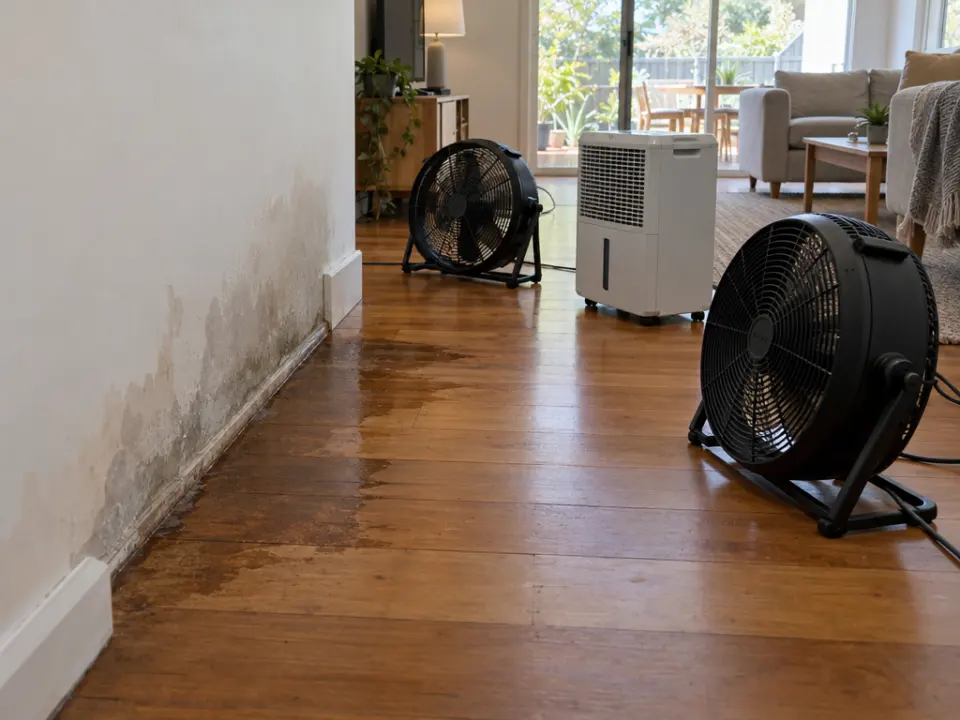
With summer holidays coming: Suncorp data shows escape of liquids claim costs rise during holiday periods, so turn the water off when you go away.
Can you get money back for water lost to a hidden leak?
Water Corporation (WA)
- Hidden leak detected or notified
- Licensed plumber repairs within 60 days
- Lodge form within 6 months of repair
- Outcome within 20 business days
Up to 50% of estimated water lost (checked October 2026), repair costs not covered. Recent bill water charge over $250 (checked October 2026) or use over 150 kL. Visible leaks (taps, cisterns, appliances, pools) excluded.
Source: Water Corporation
Sometimes, as a bill credit rather than help with the repair.
WA. Water Corporation offers up to 50% of the estimated water lost (checked October 2026), and a cracked or broken pipe underground, in walls, underneath paving or driveways may qualify. Conditions:
- The water charge on the recent bill was over $250 or use was over 150 kL (checked October 2026).
- A licensed plumber repaired it within 60 days of detection or notification, and the form is lodged within 6 months of repair.
- Visible leaks (taps, cisterns, appliances, pools) are excluded; the outcome comes within 20 business days.
Other utilities set their own terms, so check yours, and keep the plumber's invoice showing what was fixed and where.
Why water pressure matters for a burst pipe
Mains pressure against the in-building limit
Source: City of Gold Coast
High water pressure can lead to breaks in water pipes. AS/NZS 3500 requires that maximum operating pressure in a building (other than fire service outlets) not exceed 500 kPa, yet Gold Coast mains pressure varies from 220 to about 900 kPa, and the council tries to keep it below 900 kPa to reduce burst pipes.
Sydney Water quotes metres of head: network average 52 metres, some customers over 100, and properties in low areas get higher pressure. Our estimate: one metre of head is about 9.81 kPa, so 52 × 9.81 ≈ 510 kPa and 100 × 9.81 ≈ 980 kPa. On that working, the network average sits around the in-building ceiling and the highest streets near double it, though Sydney Water says most properties receive between 15 and 65 metres head, about 150 to 640 kPa on the same working.
That gap is what a pressure reduction valve handles. Buildings built or renovated since 2003 may have one; without one, the Gold Coast council recommends a plumber fit one on the owner's side of the meter, and a licensed plumber is needed to repair or adjust it. A valve manages pressure; it does not make a pipe unbreakable. And reduced pressure may affect some instantaneous hot water systems, corroded galvanised pipes and existing pressure-reducing valves, one more reason the adjustment belongs with a plumber.
How to check for a cracked pipe before it bursts
Before a pipe bursts
Source: CHOICE, Sydney Water, City of Gold Coast
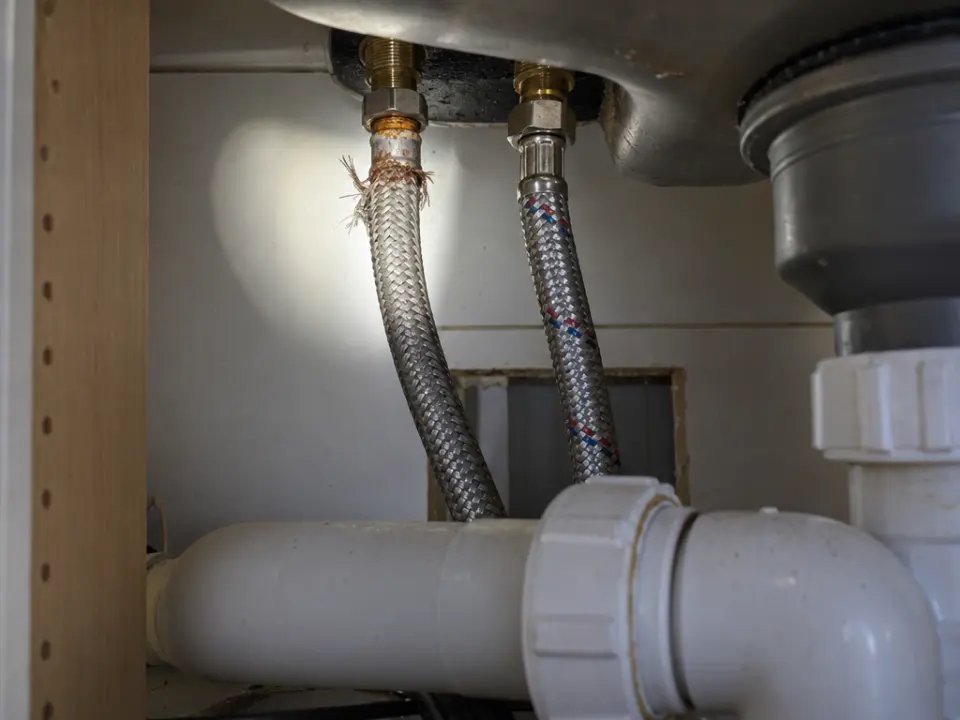
Under the sinks. Suncorp says 10% of 2024 home water damage claims were burst flexi-hoses, and advises a 10-minute check under sinks every six months for fraying, rust, corrosion, kinking or twisting, calling a licensed plumber if you find any.
At the meter. Turn off all taps and appliances, keep the meter tap on, note the dial, use no water for at least an hour, then re-check; changed last digits mean a leak, and green lawn patches can indicate an underground one. Our guide to checking your home for hidden leaks walks through it.
Your pressure. Not sure whether you have a pressure reduction valve? A licensed plumber can check.
Burst pipe: the figures in one place
First move
- Mains tap, usually next to the meter
Whose pipe
- Meter is Yarra Valley Water's dividing line; Sydney Water's is the property (check your own)
Money
- Escape of liquids cover pays for damage, not the pipe (read your PDS)
- 20% of insurers CHOICE compared exclude gradual leaks
- WA hidden leak allowance: up to 50% of estimated water lost (checked October 2026), conditions apply
Checks
- 10% of Suncorp's 2024 home water damage claims were burst flexi-hoses
- 500 kPa: AS/NZS 3500 in-building maximum (other than fire service outlets)
- Meter test: no water for at least an hour
Source: CHOICE, Sydney Water, Yarra Valley Water, Water Corporation, City of Gold Coast
Screenshot this and keep it with your meter box key.
How to fix a burst pipe: who should do the work
Not you, beyond the basics. In NSW, legally you can only do minor plumbing work, such as changing a tap washer; check your own state's rules. A cracked pipe may be repaired, replaced or, on some sewer lines, relined. Which suits your pipe is for a licensed plumber to decide after inspection. Tell them whether the main is off and which side of the meter the leak seems to be on.
For warning signs, see Cracked pipes: what breaks them, the warning signs, and what to do when one bursts and the Broken & Burst Pipes Guide.
Your next step: if you're unsure whose pipe it is, what to ask your insurer or whether your water pressure needs checking, send your question to Earth Plumbing through the Ask a Question page.
Sources
- https://www.choice.com.au/money/insurance/home-and-contents/articles/home-insurance-for-burst-pipes-and-water-leaks
- https://www.watercorporation.com.au/help-and-advice/water-issues/leaks/cant-shut-off-your-water
- https://www.watercorporation.com.au/help-and-advice/water-issues/leaks/leak-allowance-and-rebates
- https://www.sydneywater.com.au/your-home/saving-water-at-home/leak-detection.html
- https://www.sydneywater.com.au/plumbing-building-developing/plumbing/wastewater-blockages/guide-licensed-plumbers/responsibility-repairs.html
- https://www.sydneywater.com.au/water-the-environment/what-we-are-doing/projects-in-your-area/water-pressure-management-program.html
- https://www.yvw.com.au/faults-works/responsibilities/repair-responsibilities
- https://www.goldcoast.qld.gov.au/Services/Water-sewerage/Water-supply/Water-pressure
Pictures in this guide are illustrations, not photos of our jobs.