Water Night's tap pause, any night: how to check your home for hidden leaks
A few hours off the taps, done on any evening, is a good time for a one-hour water meter test and three quick checks that can show a running toilet, a weeping valve or a dripping tap you did not know about.
Published 20 October 2026 · Reading time approx. 7 min
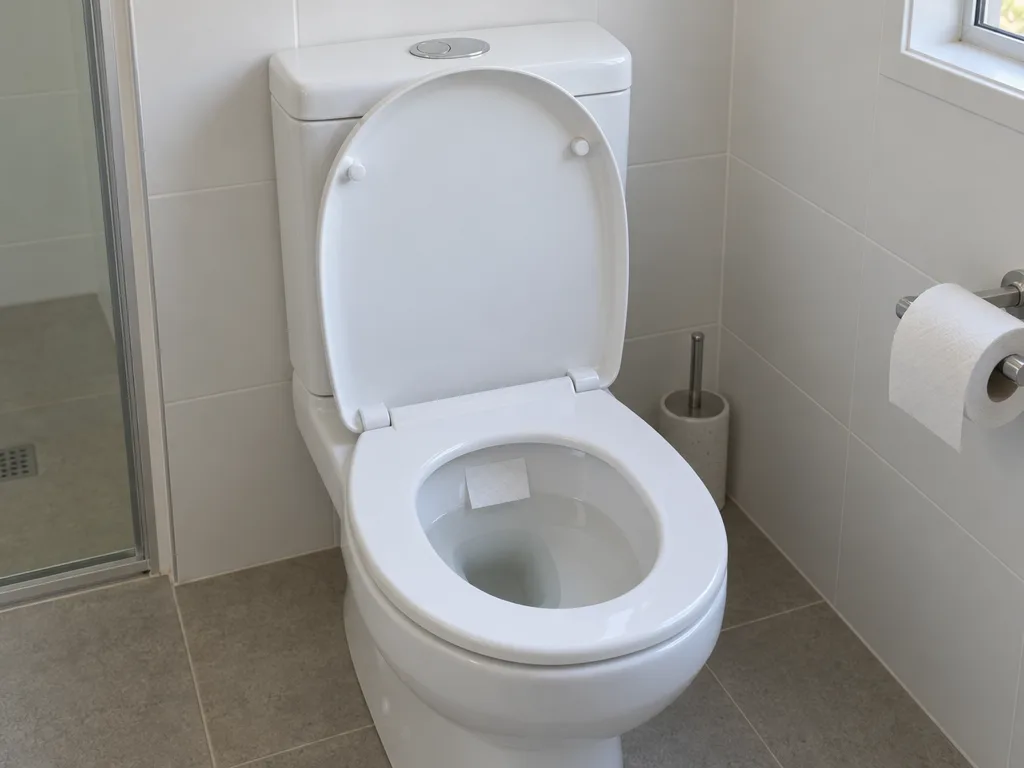
A leaking toilet can waste more water in a day than the average Sydney resident uses. Sydney Water puts a toilet cistern leak with a constant hiss at 261 litres a day, and says a person in Sydney uses about 200 L of drinking-quality water a day. Set the two side by side and one faulty cistern can waste about 61 litres a day more than one person uses. That comparison is ours, worked from the two Sydney Water figures.
Leaks like that keep running when nobody is at a tap. That is why an evening off the taps is a good time to look for them, and why a tap pause makes a better start to a leak check than an end to one.
How much water does a dripping tap or a running toilet waste?
Typical leak rates: Sydney Water figures
Source: Sydney Water
On Sydney Water's figures, a dripping tap wastes 27 to 198 L/day. A tap dripping one drop a second can waste 7,000 litres a year. A 1.5 mm hole in a pipe wastes about 99 L/day.
Toilets cover the widest spread. A cistern leak runs from about 9 L/day (slow, barely visible) to 261 L/day (constant hiss). The quiet end is the one to worry about, because you will not hear it.
Over a five-hour tap pause, a hissing cistern would lose about 54 litres (261 ÷ 24 × 5). A slow, barely visible leak would lose about 2 litres (9 ÷ 24 × 5). Both are our estimates. These are typical figures from Sydney Water, not national averages, so treat them as a guide to scale.
What is Water Night, and how do you run your own tap pause?
A five-hour tap pause
- Before 5pm: Fill bottles, the kettle and containers
- 5pm: Pause usual tap use
- At least one hour inside the window: Meter test: use no water for at least an hour, toilet included Outside the test hour the toilet can still be flushed
- 10pm: Pause ends
Source: Water Night, Sydney Water
Water Night 2026 falls on Thursday 22 October 2026, 5 to 10pm. Its theme, "Tap Pause Level Up", asks households to pause their usual tap use for five hours to notice how often they reach for running water. The night is managed by The Water Conservancy, and it sits inside National Water Week, hosted by the Australian Water Association, 19 to 25 October 2026. The federal WELS regulator calls Water Night an annual event in October, so it comes round again next spring.
You do not need the event to run the pause. The household guide sets out how: fill bottles, the kettle or containers beforehand, and the toilet can still be flushed. Cooking with water you set aside earlier works too.
What to notice is each time a hand goes to the tap. A running hand-basin tap uses 4 L per minute, so the habits add up quickly. Water Night's resources page carries a "Home Audit" and "Where do we use water?" if you want a structured version.
There is a practical reason to do this now. Melbourne's September outlook says that if dry conditions continue through spring, water restrictions "may be possible over summer 2026/27". The Bureau's outlook has El Niño at near-record levels, with a "very strong" peak likely in late spring or summer. Water a leak wastes is water you will want later.
How to check for a leak with your water meter
Street main, then the meter at the front boundary, then the property pipe under the lawn, to the garden tap (hose disconnected), the outdoor hot water system, the toilet cistern and the basin tap.
- 1Meter: note the dial, leave the meter tap on
- 2Garden tap
- 3Hot water expansion valve
- 4Toilet cistern
- 5Lawn above the pipe: green patch = possible underground leak
Source: Sydney Water
The meter test is the most useful hour of the pause. These are Sydney Water's leak detection steps:
- Turn off all taps and water-using appliances, including drip systems, dishwashers and washing machines.
- Leave the meter tap on.
- Note the meter dial.
- Use no water for at least an hour.
- Check the last digits. If they have changed, you have a leak. A bigger change means a bigger potential leak.
During a tap pause the toilet is still in use, so pick one hour of the evening when nobody flushes either. Meters and utilities vary, so check your own water provider's instructions if your meter looks different. If you are not sure which dial is which, our guide to reading your meter, star ratings and local rules walks through it.
Your bill is a second check. NSW Government advice is that if usage is much higher than expected for the household size, check for leaks.
Running toilet leak: the toilet paper test
If the meter moved, start with the toilets. Place a small piece of dry toilet paper at the back of the bowl and check it stays dry until the next flush. A cistern should not release water between flushes.
The paper catches what your eyes miss. The slowest cistern leak Sydney Water lists is the barely visible one at about 9 L/day, and you would not see that trickle down the pan by looking. Do every toilet in the house.
Hot water valve, garden taps and the lawn: three more places to look
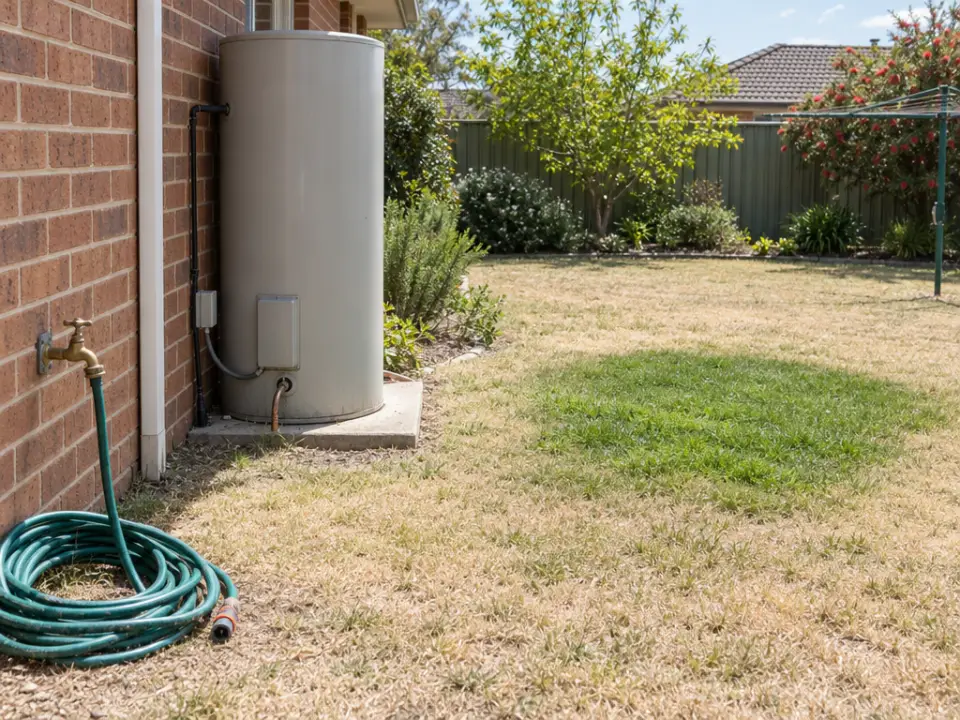
Sydney Water lists three more checks on its leak detection page:
- Hot water system. Expansion valves should not constantly leak.
- Garden taps. Disconnect the hoses first, then check the taps themselves.
- The lawn. Green patches of grass can signal an underground leak.
Spring makes the last one easier to spot, because a strip of bright grass stands out against a drying lawn. While you are outside, the NSW Government advises you to water the garden before 10am or after 4pm.
Where does the rest of your household water go?
| Everyday use | Typical water use |
|---|---|
| Regular showerhead | 10 L per minute |
| Water-efficient showerhead | 6 to 7 L per minute |
| Running hand-basin tap | 4 L per minute |
| Modern dual-flush toilet (2005 or later) | 4.5 L full / 3 L half flush |
| Front-loader washing machine | 65 L per load |
| Top-loader washing machine | 110 L per load |
| Average bath | 110 L |
Source: Sydney Water
Once leaks are ruled out, the pause shows you your habits. Sydney Water's everyday figures set the scale: a regular showerhead uses 10 L per minute against 6 to 7 L for a water-efficient one, and a top-loader uses 110 L per load against 65 L for a front-loader.
The showers are where most households can act tonight. NSW advice is to limit showers to 4 minutes or less, as each minute is about a bucket of water, and to use the half-flush. For more on what makes a real difference, see how to reduce water usage at home.
What you can fix yourself, and what needs a licensed plumber
| Checks and minor work (NSW, per Sydney Water) | Licensed plumber |
|---|---|
|
|
Rules for minor work differ between states.
The checks above are yours to do; the repair usually is not. Legally you can only do minor plumbing work, such as changing a tap washer, and a leak inside the home or on the property usually needs a licensed plumber. That is Sydney Water's advice for NSW, and other states set their own rules.
Some leaks show on the meter but will not show themselves. Sydney Water notes that when a meter test shows a leak you cannot locate, a leak detection specialist can help, and not all plumbers have the special tools and skills to find leaks hidden underground and inside walls. Ask about this when you book.
If a tap or toilet is past repair, the replacement is plumber's work too. Installing WaterMark-listed products must be done by a licensed plumber under the National Construction Code. The highest WELS rating is 6 stars for taps, toilets and dishwashers, and 5 for showers and washing machines, and retailers, including online stores, must display WELS water-rating information. Our leaking taps guide and broken and burst pipes guide go further on each.
Who pays when the leak is on your property?
Pipes and fittings on the property:
the property owner's responsibility
Hidden leak allowance: Sydney Water may offer one if a licensed plumber or qualified technician finds and repairs a hidden leak. Other utilities differ: check yours.
Source: Sydney Water
The meter is the line. Under Sydney Water's rules, the property owner is responsible for pipes and fittings on the property that connect to the water network, and the utility owns and maintains the meter.
There may be some help with the bill. Sydney Water says a hidden leak allowance may be available if a licensed plumber or qualified technician finds and repairs a hidden leak. Other utilities set different terms, so check your own bill or call your water provider before the repair, and keep the plumber's paperwork.
The leak check at a glance
The steps
- Turn off all taps and water-using appliances, including drip systems, dishwashers and washing machines
- Note the meter dial
- Use no water for at least an hour
- Check the last digits: changed = leak
- Dry toilet paper at the back of the bowl stays dry until the next flush
- Expansion valve not constantly leaking, garden taps dry with hoses off, no green patches
Source: Sydney Water
The figures
- Dripping tap 27 to 198 L per day
- Leaking pipe (1.5 mm hole) 99 L per day
- Toilet cistern leak, slow/barely visible 9 L per day
- Toilet cistern leak, quite visible, constant hiss 261 L per day
- One drop a second can waste 7,000 litres a year
- About 200 L a day per person in Sydney
Source: Sydney Water
One hour on the meter, a square of toilet paper in each bowl, and a walk past the hot water system, the garden taps and the lawn. That is the whole check.
Your next step
If the last digits on your meter moved during your test hour, or the toilet paper came up wet, write down what you saw and which checks you ran. Then send that to Earth Plumbing through our Ask a Question page, and we will help you work out what kind of help the leak needs. Water Night returns each October, but the meter will tell you the same thing on any quiet evening before then.
Sources
- https://www.sydneywater.com.au/education/drinking-water/water-use-conservation.html
- https://www.sydneywater.com.au/your-home/saving-water-at-home/leak-detection.html
- https://waternight.com.au/water-night-for-households
- https://waternight.com.au/
- https://waternight.com.au/resources/
- https://www.nationalwaterweek.org
- https://www.waterrating.gov.au/consumers/water-saving-tips
- https://www.waterrating.gov.au/consumers/compare
- https://www.nsw.gov.au/environment-land-and-water/water-use-and-monitoring/reduce-water-use-at-home
- https://www.yvw.com.au/about-us/reports/2026-water-outlook-melbourne
- https://www.bom.gov.au/climate/ahead/outlooks/archive/20261001-outlook.shtml
Pictures in this guide are illustrations, not photos of our jobs.