Cracked pipes: what breaks them, the warning signs, and what to do when one bursts
Most cracked pipes come down to five causes and give a warning before they burst, and if one has already gone, the first job is yours: shut the water off at the stop valve.
Published 28 September 2026 · Reading time approx. 8 min
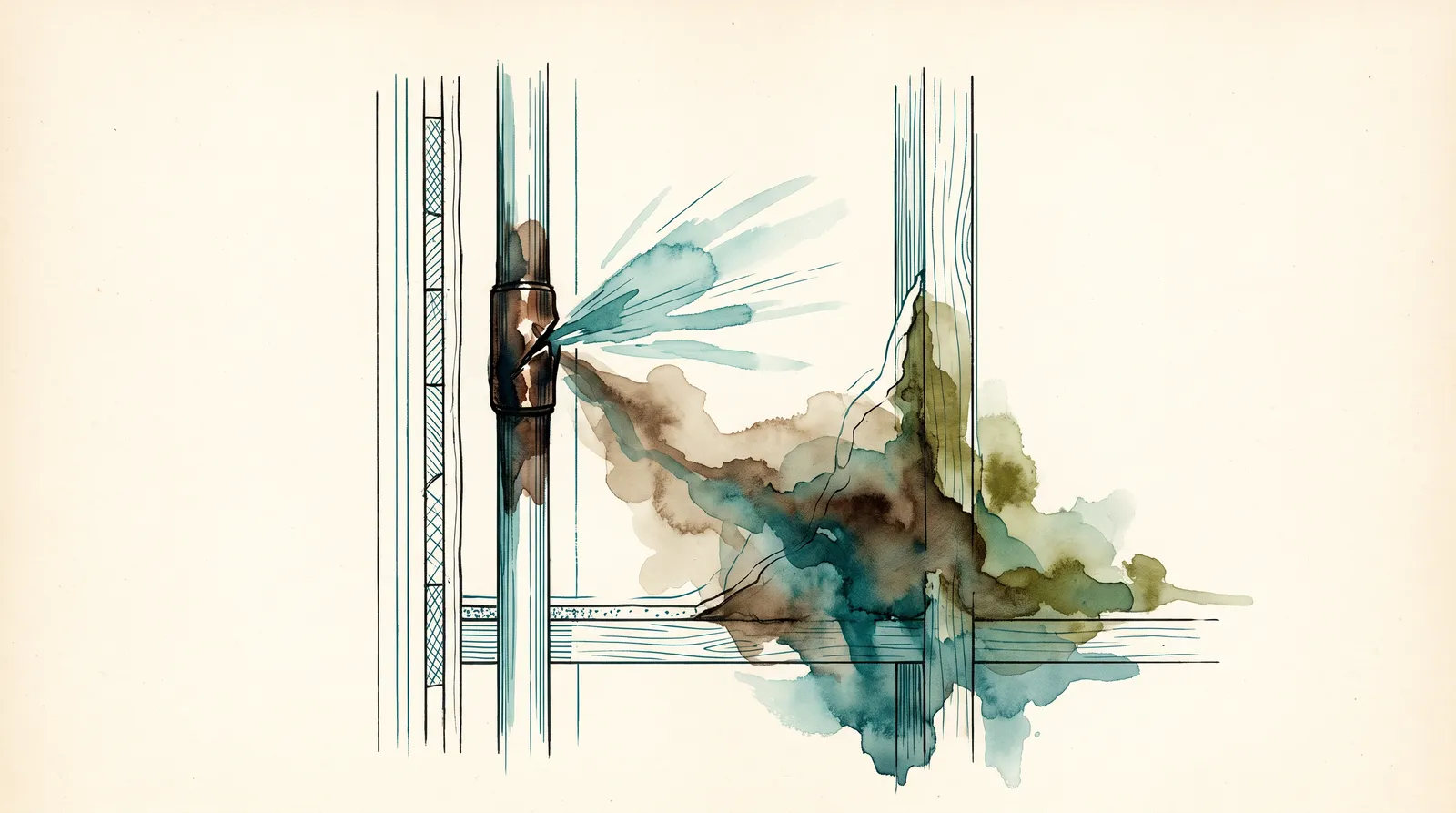
Most cracked pipes on a home block come down to five things: age, tree roots, clay soil that moves, digging, and pressure surges. They usually warn you before they burst, with a water bill that jumps, a green strip in a dry lawn, or a hiss when every tap is off. If a pipe has already let go, the first job is yours, not the plumber's. Shut the water off at the stop valve.
A pipe has just burst: what to do in the first ten minutes
The first ten minutes, in order
- Shut the main stop valve.
- Keep clear of power. The switchboard only if you can reach it dry.
- Open the lowest cold tap to drain the lines.
- Photograph the damage before cleaning up.
- Call a licensed plumber.
How we worked this out: NSW Government, plumbing, draining and gasfitting licences, and the QBCC's unregulated plumbing guide, for the final step. No times or figures are drawn, because neither source sets any.
- Shut off the water at the main stop valve. On most houses it sits beside the water meter, near the front boundary. Turn it clockwise until it stops.
- Keep clear of power. If water is reaching power points, appliances or the switchboard, stay back. Only switch off at the switchboard if you can reach it without standing in water.
- Drain the lines. Open a cold tap at the lowest point of the house to let out the water still in the pipes.
- Photograph the damage before you mop up. Your insurer may ask for it.
- Call a licensed plumber.
Our broken and burst pipes guide covers those first minutes in more depth.
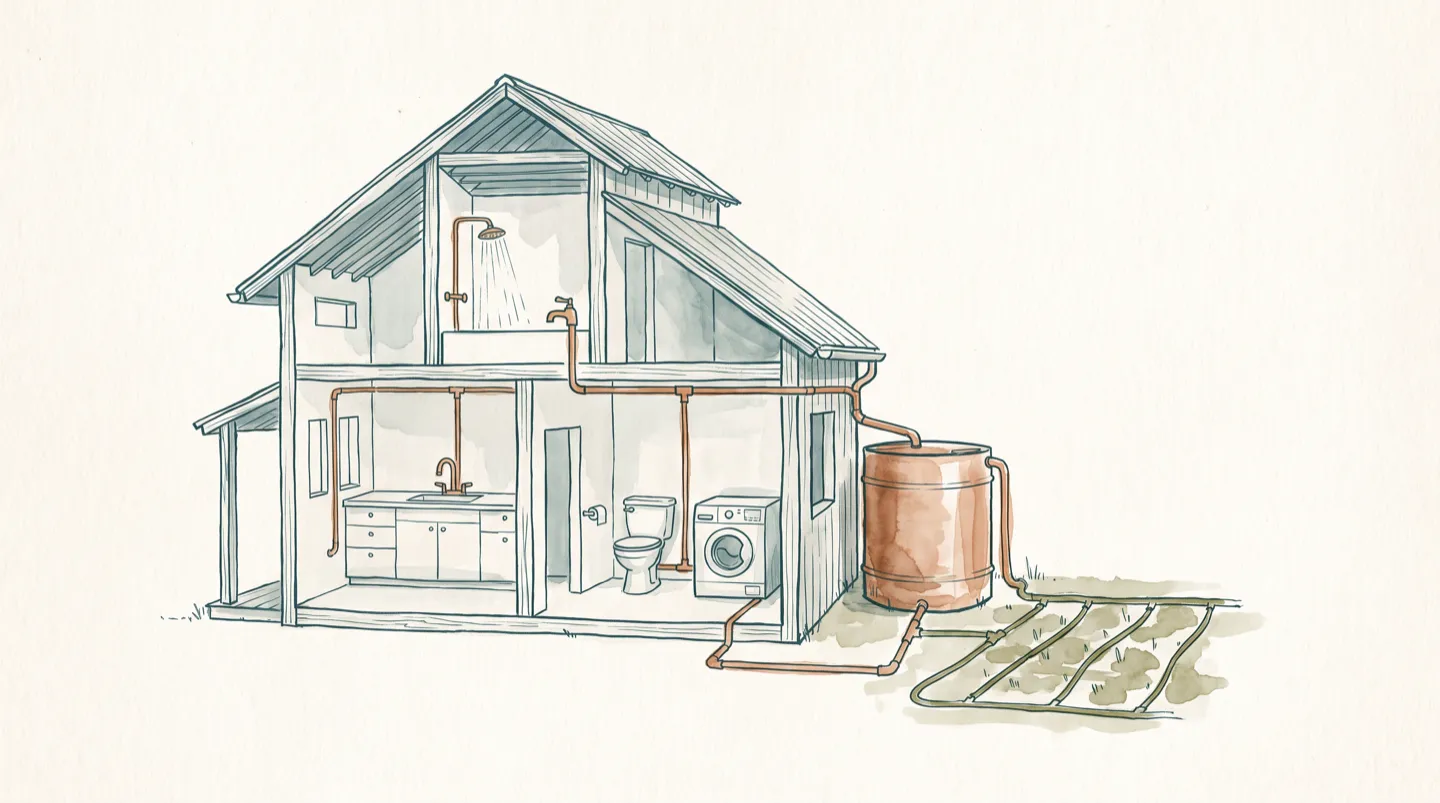
If water is coming up in the footpath or nature strip on the street side of your meter, it may be your water utility's main rather than your pipe. In that case, call the utility's faults line first.
The last step on the list is not optional. In NSW, plumbing, draining and gasfitting work needs the right licence or certificate, and getting one depends on qualifications and experience. Queensland's building regulator is just as plain: most plumbing work in the state is regulated and needs a QBCC licensed plumber or drainer, to protect community health and safety. Other states have their own regulators and rules, so check yours before anyone picks up a spade.
Earth Plumbing's rule of thumb is simple. The valve is yours. The pipe is the plumber's.
What cracks a pipe in the first place
Predicting which pipe will fail next is hard. It is hard enough that CSIRO is using data-driven and AI techniques to forecast which underground water mains are at risk of failure, to help utilities cut maintenance costs. That work covers the pipes on the utility's side of the meter. On your side, the usual suspects are well known.
Street to house, and where it cracks
Water supply in: street main, meter and stop valve at the boundary, under the lawn, into the house. Sewer out: house, under the yard, back to the street. And a flexi-hose under the kitchen sink.
- 1Corroded galvanised section, in the wall.
- 2Tree root pushing into a sewer joint.
- 3Clay soil swelling and shrinking around the pipe.
- 4Driveway and fence post over a shallow section.
- 5Quick-closing tap valve: a thud travels back up the line.
How we worked this out: QBCC, guide to preventing structural damage (PDF), for pipes in reactive clay soil; CHOICE, home insurance for burst pipes and water leaks, for the flexi-hose under the sink. No figures are drawn, because the placement is general, not measured.
- Age and corrosion. Galvanised steel water pipes, common in older homes, rust from the inside until the wall thins and splits. Cast iron sewer and waste pipes scale up and crack with age.
- Tree roots. Roots find the joints in older sewer and stormwater lines, where moisture escapes, and grow in. As they thicken, they can split the pipe open. Our guide to preventing tree root intrusion covers keeping roots out of your drains.
- Reactive clay soil. Clay swells when wet and shrinks when dry, and a pipe buried in it moves with it. More on this below, because this season matters.
- Ground disturbance. A new driveway, a fence post, landscaping or a heavy vehicle over a shallow pipe can crack it. The damage sometimes shows months later.
- Pressure surges. When a tap or appliance valve shuts fast, the moving water stops dead and slams back along the line. That thud in the wall is called water hammer. It strains joints and fittings every time it happens, and high mains pressure makes it worse.
If your drains are slow or backing up rather than broken, that is a different problem with different causes. Our blocked drains guide covers it.
Why a dry spring and a wet summer are hard on clay and pipes
The Bureau of Meteorology's El Niño explainer, updated 17 September 2026, says El Niño conditions are likely to persist well into the latter half of 2026, and its July to September outlook had rainfall below average across parts of southern and eastern Australia. Meanwhile, the NSW SES notes that storm season runs from September to April.
Put those together on a reactive clay site. If a dry spring shrinks the soil and storm rain then soaks it, a buried pipe loses support and is pushed again within a few months. That swing is what opens joints and cracks rigid pipe.
It also works in reverse. The QBCC guide to preventing structural damage on reactive soil sites says that once cracking appears, site maintenance should be checked. It adds that corrective action may include regrading surface drainage, moving gardens and trees, or repairing leaks in water supply, stormwater and sewer drainage. A leaking pipe is not just a victim of moving soil. It can wet one patch of clay so that patch swells more than the ground around it, which moves the pipe again.
The shrink and swell loop
- Dry weather. Clay shrinks and the pipe loses its support.
- Heavy rain. Clay swells and pushes against the pipe.
- The pipe gives. A joint opens or the pipe cracks, and water leaks.
- The leak feeds it. One patch of clay swells more than the ground around it, and the movement starts again at step one.
Break the loop at step 3, per the QBCC
- regrade surface drainage
- move gardens and trees
- repair leaks in water supply, stormwater and sewer drainage
How we worked this out: QBCC, guide to preventing structural damage (PDF), for the movement and for the corrective actions quoted in the callout; Bureau of Meteorology, El Niño explainer, and NSW SES, storm season, for the dry-then-wet swing behind stages 01 and 02.
Signs a pipe is cracked before it bursts
A slow crack rarely stays hidden for long. Look for:
- A water bill or meter reading that jumps without any change in how you use water.
- A soggy or unusually green strip in the lawn, especially when the rest of the grass is dry.
- A hiss or trickle in a wall or under the floor with every tap turned off.
- New cracks in paving, paths or walls near where a pipe runs.
- A damp patch low on an inside wall, or a musty smell that will not clear.
- A drop in water pressure at the taps.
- A sewage smell outside, or a sunken patch over the sewer line.
To check the meter, turn off every tap and water-using appliance and note the reading. Wait an hour without using any water, then read it again. If the numbers have moved, water is going somewhere it should not.
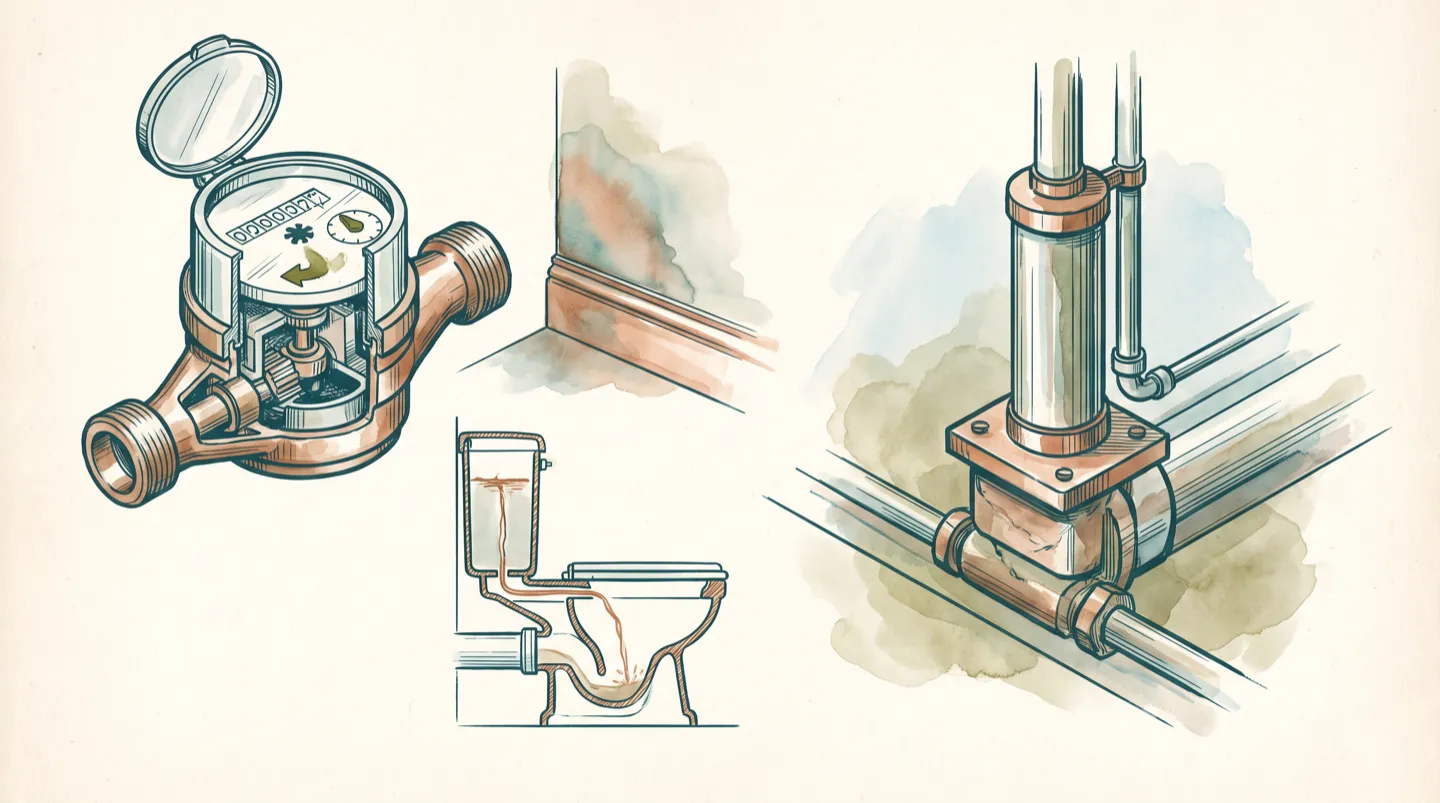
Not every damp patch is a broken pipe. A slow hidden leak creeps up over weeks. A blockage shows up at the drains, not the meter. A cracked or broken supply pipe is often sudden and obvious. This comparison helps you tell them apart before you call.
| What you notice | Cracked or broken pipe | Slow hidden leak | Blocked drain |
|---|---|---|---|
| Meter moves with all taps off | Often fast and obvious | Slow creep | Usually no change |
| Water use change on the bill | Sudden jump | Gradual rise over weeks | Usually no change |
| Soggy or extra-green strip in lawn | Common over supply line | Possible | Rare |
| Hissing with taps off | Common | Sometimes faint | No |
| Gurgling or slow drains, water backing up | Only if the sewer is broken | No | The main sign |
| New cracks in paving or walls nearby | Possible | Rare | No |
| Drop in tap pressure | Common | Rare | No |
The hose under your sink is a pipe too
The pipes in the ground get the attention, but some of the most common failures sit in the kitchen and bathroom. CHOICE, citing insurer Suncorp, reports that in 2024, 10% of home insurance water-damage claims were caused by burst flexi-hoses.
How we worked this out: CHOICE, home insurance for burst pipes and water leaks, reporting Suncorp's 2024 water-damage claims. The source publishes the flexi-hose share only, so the rest of the bar is left unbroken rather than split into causes nobody has counted. No dollar figures are drawn.
A flexi-hose is the braided connector between the wall and a tap, toilet or dishwasher. It is not a buried pipe, but it is under the same mains pressure, and it bursts just as suddenly.
The good news is that you can see them. Open the cupboards under your sinks and look behind the toilet. Rust spots on the braid, fraying, bulges or tight kinks are all reasons to have a hose replaced before it lets go.
What a proper repair is measured against
Once a plumber has found the break, the fix can be a spot repair, relining the old pipe from inside, or replacing the whole run. Replacement can mean digging a trench, or it can mean pipe bursting, a trenchless method where a new pipe is pulled through the old one and splits it apart as it goes.
Whatever the method, there is a standard behind it. In NSW, plumbing work can meet the Plumbing Code either by the "Deemed to Satisfy" route, built to AS/NZS 3500, or by a performance solution that meets or exceeds it. AS/NZS 3500 is the plumbing and drainage series that trade work is measured against.
That standard keeps moving. Standards Australia's 2025 update added new requirements for higher-pressure classes of polyethylene water pipe for installation in northern Australia, "where certain conditions have led to shortened pipe life expectancy". If you live in Queensland, the Northern Territory or northern WA and a quote includes polyethylene pipe, ask which pressure class it is.
A repair built for your conditions is also the greener one. It means less water lost to the next crack and less pipe dug up and sent to landfill.
Questions to ask before you accept a quote
Sources: NSW Government, plumbers and drainers standards and notes; Standards Australia, spotlight on AS/NZS 3500; QBCC, unregulated plumbing guide. Ticking is for your own use only; nothing is recorded or sent.
Your next step
If you have spotted any of these signs, or you have just shut a valve on a burst, note where the water or damp shows up, when you first noticed it, and whether your meter moves with every tap off. Those details tell a licensed plumber most of what they need to know before they arrive.
You can send them to Earth Plumbing through the enquiry form. Every day a crack runs is water going into the ground instead of your garden or your glass. For more ways to keep it where it belongs, read our tips for reducing water usage at home.
Sources
- https://www.nsw.gov.au/business-and-economy/licences-and-credentials/building-and-trade-licences-and-registrations/plumbing-draining-and-gasfitting
- https://www.qbcc.qld.gov.au/news/unregulated-plumbing-guide
- https://www.csiro.au/en/research/technology-space/ai/water-pipe-failure-prediction
- https://www.bom.gov.au/news-and-media/el-nino-what-it-means-for-australias-climate
- https://www.ses.nsw.gov.au/stormseason
- https://www.qbcc.qld.gov.au/sites/default/files/2021-10/guide-preventing-structural-damage.pdf
- https://www.choice.com.au/money/insurance/home-and-contents/articles/home-insurance-for-burst-pipes-and-water-leaks
- https://www.nsw.gov.au/housing-and-construction/compliance-and-regulation/plumbers-and-drainers/standards-and-notes
- https://www.standards.org.au/blog/spotlight-on-as-nzs-3500