Is your toilet leaking? The dye test, the silent leak and what to do next
Put a few drops of food dye in the cistern and don't flush for 15 minutes: if colour reaches the bowl, the toilet is leaking, and even a leak you can't hear can waste thousands of litres a year.
Published 10 November 2026 · Reading time approx. 6 min
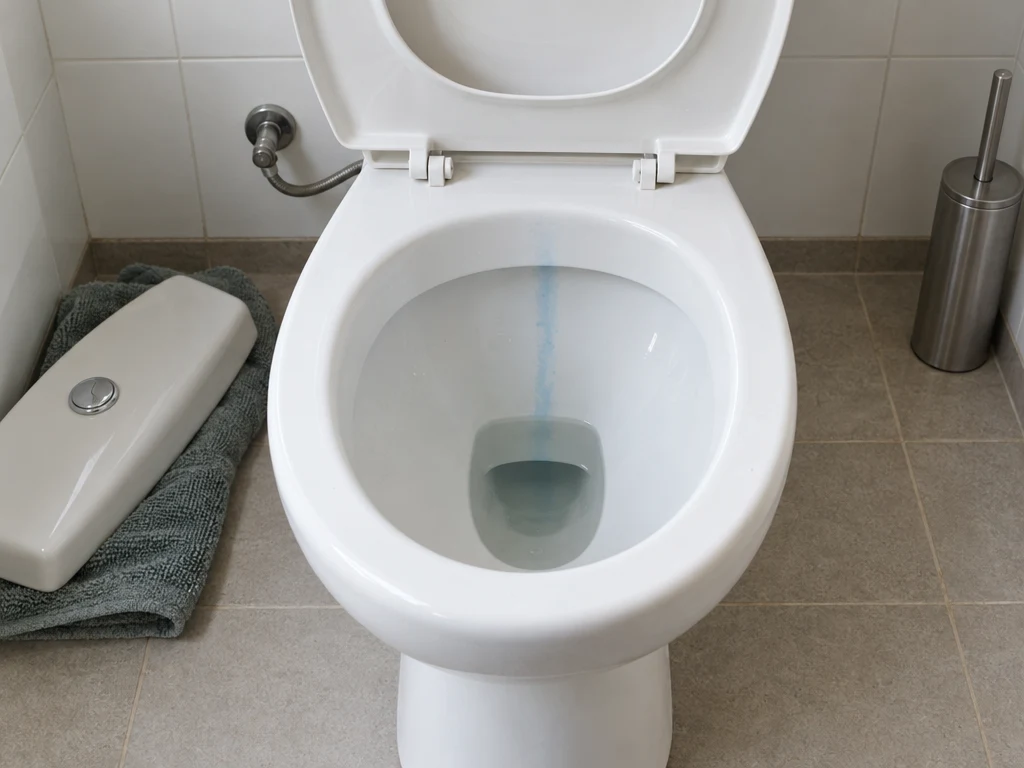
A toilet can put more water down the bowl than you flush, without making a sound. Here is our estimate and its working. YourHome lists a leak visible in bowl, no noise, at 1.5 L/hour. Over 24 hours that is about 36 litres (1.5 × 24). WELS ratings assume one person's daily use of four half flushes and one full flush. On a 4.5 L/3 L dual flush, which is 4 star, that day comes to 16.5 litres (4 × 3 + 4.5). So a leak you would never hear can send more than twice one person's rated daily flushing straight past the seat.
Finding one takes about 15 minutes and a few drops of food dye. Fixing it usually means work inside the cistern, and who may do that depends on your state.
Is my toilet leaking if I can't hear it?
The dye test, side on
Source: Greater Western Water
Quite possibly. Toilet leaks often go unnoticed because the water trickles down the back of the bowl, so the pan looks normal and the cistern stays quiet.
A leaking toilet isn't always loud or obvious: YourHome's table starts at a slow leak, barely visible, at 0.5 L/hour, or 4,400 L/year.
That is the case for testing a toilet that seems fine. The hiss comes late, if it comes at all.
How much water does a running toilet waste?
How much a toilet leak wastes, by what you can see and hear
Source: YourHome, Australian Government
Greater Western Water puts it plainly: a continuously running toilet can waste up to 60,000 to 96,000 litres of water a year.
YourHome shows how the loss climbs as a leak gets worse. A silent leak you can see in the bowl runs at 1.5 L an hour. Once it is just audible, it is 6 L/hour, or 52,600 L/year. That is four times the flow (6 against 1.5) for the step from "I can see it" to "I can hear it". At constant hissing, YourHome lists 11 L/hour, or 96,400 L/year.
To see that in a day: 11 litres an hour is about 264 litres a day (our estimate, 11 × 24). In Melbourne, Target 150 asks each person to keep to a personal water usage target of no more than 150 litres a day, and Melbourne Water calls it a voluntary initiative. One hissing toilet would use more than that whole daily target on its own.
How do I do the toilet dye test?
One evening, two checks
- Evening, before bed: photograph the water meter YourHome
- Same evening: take the cistern lid off and add a few drops of food dye
- Then 10 to 15 minutes with no flushing GWW, YourHome
- End of the wait: colour in the bowl means a leak GWW, YourHome
- First thing in the morning: compare the meter with last night's photo YourHome
Every few months: test again GWW
Source: Greater Western Water (GWW), YourHome
Greater Western Water describes it in four moves. Remove the cistern lid, put a few drops of food dye in the cistern, and don't flush for 10 to 15 minutes. If dye has seeped into the bowl, there is a leak.
The Australian Government's YourHome guide gives the same test: a couple of drops of food colouring, and colour in the bowl within 15 minutes without flushing means a leak. Use enough dye to show against white porcelain.
Then back it up with the meter. YourHome suggests photographing the meter before bed and comparing it to the reading first thing in the morning. If no water was used overnight and the meter has still moved while the dye stayed in the cistern, the water is going somewhere else. Our guide to the Water Night tap pause and checking your home for hidden leaks walks through the whole-house version. If the dials on your meter are a mystery, start with water literacy at home: your meter, your star ratings and your local rules.
Once is not enough. Greater Western Water suggests you check the toilet for leaks every few months.
Why does a toilet keep running?
Fix leaking toilets immediately.
YourHome, Australian Government
The usual suspect is small. Toilet leaks are often caused by the rubber valve in the cistern deteriorating, and the same page suggests contacting a licensed plumber.
YourHome doesn't hedge: Fix leaking toilets immediately. Earth Plumbing's view is the same. A dye trail is a job for this week, not one for the next renovation. Every hour you wait, the leak keeps running at whatever rate it has reached.
Can I fix a running toilet myself?
| State and regulator | What a householder may do | Limits the same page sets |
|---|---|---|
| Queensland (QBCC) | Anyone with the appropriate knowledge and skills may repair or replace a drop valve washer, float valve washer or suction cup rubber in a toilet cistern (unregulated work) | Work must still meet minimum standards; consumers can still engage a licensed plumber |
| Western Australia (Building and Energy) | Owners and occupiers may replace a cistern washer | Someone else may do it for you only if no payment is involved; all other water supply, sanitary and drainage work needs a licensed plumber or permit-holder |
| Any other state or territory | Check your own state regulator's list before touching the cistern | Otherwise, a licensed plumber |
Source: QBCC, Building and Energy (Government of Western Australia)
Start with your state regulator's own list. If your state doesn't name the job, call a licensed plumber.
"It's only a washer, anyone can swap it" depends on the state: QBCC and WA's Building and Energy allow a cistern washer swap, but the rule is set state by state.
In Queensland, QBCC lists repairing or replacing a drop valve washer, float valve washer or suction cup rubber in a toilet cistern as unregulated work that anyone with the appropriate knowledge and skills may do. The same page says the work must still meet minimum standards, and that "Consumers can still engage a licensed plumber".
In Western Australia, owners and occupiers may replace a cistern washer. Someone else can do it for you only if no payment is involved. Beyond that short list, all other water supply, sanitary and drainage work needs a licensed plumber or permit-holder.
Anywhere else, check before you reach into the cistern.
Should I repair or replace an old toilet?
Litres per flush, old and new
Source: Greater Western Water (GWW), YourHome, WELS (Water Rating)
Sometimes the leak is the nudge to look at the whole toilet. An older toilet, particularly a single-flush one, could use 9 L or more per flush. Greater Western Water puts some older toilets at around 18 L per flush.
The star rating tells you where a new one sits. A typical 6 L/3 L dual flush is 3 star, the minimum required by the National Construction Code, and a 4.5 L/3 L dual flush is 4 star. Older products can use up to 50% more water than a 4 or 5 star replacement.
YourHome's example is the big one. Replacing a 12 L single-flush toilet with a 4.5 L/3 L WELS 4-star toilet could cut a household's toilet water use by more than 50%.
Replacement isn't the only route. YourHome notes that a single-flush toilet can be updated to dual flush, or a plumber can adjust the flush volume.
Renting, or renting a place out? The national WELS page says a number of state and territory governments set minimum water efficiency for fittings in tenanted properties, typically 3 stars. Where a property falls short of its state's minimum, the landlord may be liable for paying the water bills. The page tells you to check your own government's requirements.
Can a bottle in the cistern cut each flush?
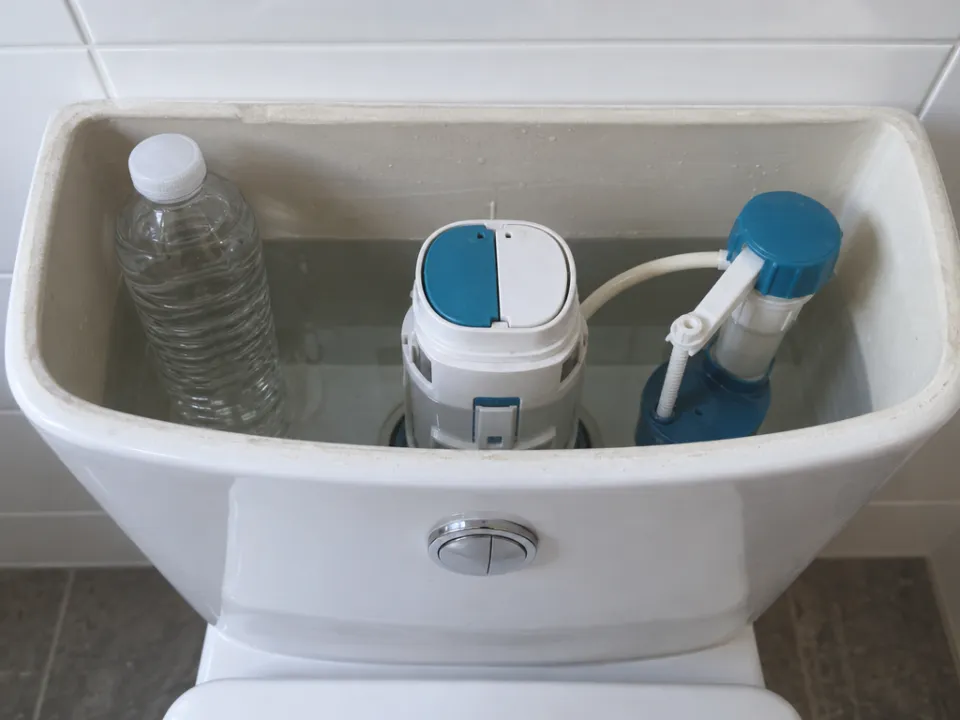
Yes, within limits. YourHome says a water-filled plastic bottle in the cistern reduces water per flush, as long as it does not obstruct the mechanism.
Don't use a brick instead: bricks can crumble and stop the system working, and Greater Western Water gives the same warning.
A bottle trims each flush. It does nothing for a leak, so run the dye test first.
Dye in the bowl? Where to go from here
Your result points to one of three next moves.
Colour reached the bowl. The cistern is leaking. If you are in Queensland or WA, the table above shows exactly what you may do yourself and on what terms. Anywhere else, check your own regulator's list first. In Western Australia, anything past a cistern washer needs a licensed plumber or permit-holder.
The bowl stayed clear, but the meter moved overnight. The toilet is probably not the culprit. Work through the whole-house leak check next.
No leak, but the toilet is an old single flush. Weigh a dual-flush conversion or a 4-star replacement using the flush figures above.
If you are stuck between a repair and a new toilet, or unsure what your state lets you do, ask Earth Plumbing on our Ask a Question page. Tell us what the dye did and what the meter said, and we'll help you work out the next step.
Sources
- Your bathroom, Greater Western Water
- Reducing water use, YourHome (Australian Government)
- What WELS star ratings mean, Water Rating (Australian Government)
- Unregulated plumbing guide, QBCC
- Plumbing work in your home, Building and Energy, Government of Western Australia
- Water restrictions and water saving rules, Melbourne Water
Pictures in this guide are illustrations, not photos of our jobs.