Water quality concerns related to leaking taps
A dripping tap is a water-quality question before it is a bill question. The honest answer is more specific, and more useful, than the fear that a leak is poisoning what comes out of the tap.
Published 7 April 2024 · Updated 14 April 2024 · Reading time approx. 7 min
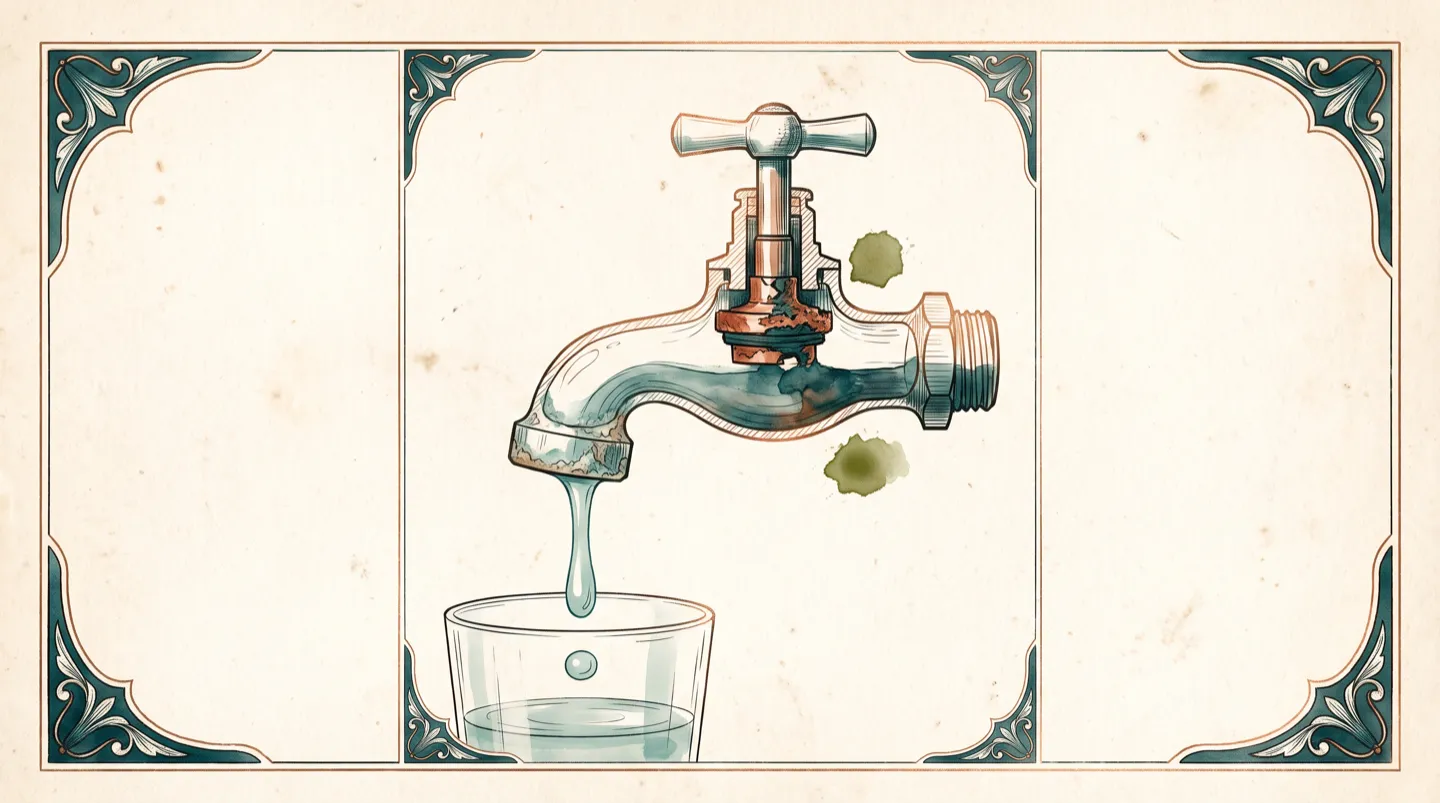
Search "does a leaking tap affect my water quality" and you will find a lot of writing designed to worry you. The truthful version is calmer and more precise. On a mains-pressure supply, the drip itself is almost entirely a waste problem, not a contamination one. But a tap that has started to leak is often telling you something real about its own condition and about the water sitting behind it, and those are genuine quality signals worth reading. This is where the drip and your drinking water actually meet, and where they do not.
First, the part that is simply waste
A steadily dripping tap wastes a surprising amount of water. Sydney Water's water-saving guidance rates the loss at as much as 12,000 litres a year for a fast drip; even a modest one drip a second adds up to roughly 11,000 litres over the same period.1 A silently leaking toilet wastes far more again, often tens of thousands of litres a year, because nobody hears it. None of that water is unsafe. It is treated drinking water going straight to the drain, which is reason enough to fix the leak, but it is not a health story on its own.
The water-quality question, answered honestly
Here is the mechanism that most alarmist writing skips: a pressurised mains supply pushes water out of the tap. A drip is water escaping under that pressure, not contaminants being drawn back up the line into your glass. So the common claim that "bacteria enter your drinking water through the leaking tap" does not describe how a mains-fed tap works. The real water-quality concerns tied to a leaking tap are more particular, and there are four of them worth knowing.
The tap itself is degrading. Most household taps drip because a rubber washer or seal has hardened, or the brass seat it presses against has corroded and roughened. That same wear can throw flakes of corrosion and mineral scale into the water leaving the spout, which is what people notice as a metallic taste, a gritty feel, or cloudy first-draw water in the morning. The fix for the drip (reseating or replacing the worn parts) is usually the fix for the taste, too.
Scale and biofilm at the outlet. The aerator, the small screen at the tip of the spout, is the one place in a tap where water slows and air meets it. Mineral scale builds there, and in a warm bathroom a thin biofilm can grow on that scale. This is a surface-of-the-fixture issue, not a mains issue, and it is why a monthly rinse of the aerator does more for the taste of your water than any amount of worry about the pipe.
Damp and mould around the fixture. A leak that pools, under a sink, behind a vanity, in a wall cavity, does affect the air and surfaces you live with. Persistent damp is how mould establishes, and that is a real indoor air-quality concern even though it never touches the water in the pipe. This is the quiet, cumulative cost of ignoring a leak.
Tank and bore supplies change the stakes. If your drinking water comes from a rainwater tank or a bore rather than a treated town main, there is no chlorine residual and no pressure guarantee, and a fault at any fixture matters more. On tank or bore water, a change in taste, smell or colour is worth acting on promptly, and the sensible response is to test the supply rather than to assume the tap is the culprit.
A new metallic taste, a musty smell, visible discolouration, or cloudy first-draw water are the signals worth reading. Any one of them means inspect the tap and, on tank or bore supply, test the water. They are prompts to look, not proof of contamination.
Where the drip really meets your drinking water: standing still
If there is a legitimate drinking-water concern near a household tap, it is not the leak. It is stagnation, and it is well understood by the people who set the guidelines. Water that sits overnight in contact with brass fittings and copper pipe can pick up small amounts of metal. Australia's environmental health committee, enHealth, advises running a cold drinking tap for about ten seconds first thing in the morning to draw fresh water through, and for at least two minutes after a long absence such as a holiday, when water may have been standing for days.2 For copper specifically, a minute of flushing brings elevated levels back down.
This is also why the rules are tightening. From 1 May 2026, new copper-alloy plumbing products that carry drinking water (taps, mixers, valves, fittings) must meet a low-lead limit under the National Construction Code, and comply by carrying the Lead Free WaterMark.3 A leaking tap does not create a lead problem, but if you are replacing a worn tap anyway, choosing a Lead Free WaterMark product is the water-quality upgrade hiding inside the repair.
Who fixes what, and where the line sits
Of the faults this post covers, the dripping tap is the approachable one. In most states a householder may swap a washer as ordinary upkeep; the supply pipework, the tap body and everything upstream of it belong to a licensed plumber. Where exactly that line sits varies by state, so look it up with your state or territory plumbing regulator before going further than a washer, rather than trusting a blanket rule from any website.
What good repair looks like is worth knowing, because it decides whether the drip comes back. A fresh washer pressed onto a corroded seat will drip again within months; a repair that lasts deals with the seat too, or swaps the mechanism for ceramic discs. Where a leak has been pooling out of sight, the job also includes drying the cavity and checking for mould before it is closed up. Plumbing work in Australia must be carried out by a licensed plumber, and this is one of those jobs where the difference between a patch and a proper repair is exactly what you are paying a professional to know.
This entry sits under our guide to leaking taps, which covers tap anatomy, why re-washered taps start dripping again, and the DIY-versus-licensed line in more detail.
If your tap has changed the taste, smell or look of your water, or a leak has been quietly pooling somewhere it should not, describe what you are seeing at our enquiry desk and we will point you to a sensible next step.
Sources
- Sydney Water: Water saving tips. The dripping-tap and leaking-toilet waste figures used here, and the note that worn washers and seals are the usual cause, come from Sydney Water's household water-efficiency guidance. Actual loss depends on how fast a tap drips.
- enHealth: Reducing exposure to metals in drinking water from plumbing products, Australian Government Department of Health. The morning-flush and post-absence flushing advice, and the point that metals accumulate during stagnation in contact with copper and brass, are drawn from this guidance, which supports the Australian Drinking Water Guidelines.
- Lead free plumbing products, National Construction Code, Australian Building Codes Board. From 1 May 2026 only lead-free copper-alloy products (weighted average lead of not more than 0.25%) can be certified for drinking-water systems; the Lead Free WaterMark identifies compliant products.